Soren Kierkegaard
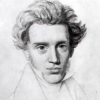
Soren Kierkegaard
Søren Aabye Kierkegaard; 5 May 1813 – 11 November 1855) was a Danish philosopher, theologian, poet, social critic and religious author who is widely considered to be the first existentialist philosopher. He wrote critical texts on organized religion, Christendom, morality, ethics, psychology, and the philosophy of religion, displaying a fondness for metaphor, irony and parables. Much of his philosophical work deals with the issues of how one lives as a "single individual", giving priority to concrete human reality over abstract thinking...
NationalityDanish
ProfessionPhilosopher
Date of Birth5 May 1813
CityCopenhagen, Denmark
CountryDenmark
Soren Kierkegaard quotes about
A road well begun is the battle half won. The important thing is to make a beginning and get under way.
The most common form of despair is not being who you are.
God creates everything out of nothing. And everything which God is to use, he first reduces to nothing
Where am I? Who am I? How did I come to be here? What is this thing called the world? How did I come into the world? Why was I not consulted? And If I am compelled to take part in it, where is the director? I want to see him.
The highest and most beautiful things in life are not to be heard about, nor read about, nor seen but, if one will, are to be lived.
It is not where we breathe, but where we Love, that we live.
People demand freedom of speech as a compensation for the freedom of thought which they seldom use.
It is very dangerous to go into eternity with possibilities which one has oneself prevented from becoming realities. A possibility is a hint from God. One must follow it.
To be a woman is something so strange, so confusing and so complicated that only a woman could put up with it.
God creates out of nothing. Wonderful you say. Yes, to be sure, but he does what is still more wonderful: he makes saints out of sinners.
Life is not a problem to be solved, but a reality to be experienced.
And this is one of the most crucial definitions for the whole of Christianity; that the opposite of sin is not virtue but faith.
It is not the path which is the difficulty; rather, it is the difficulty which is the path.
Most people are subjective toward themselves and objective toward all others, frightfully objective sometimes--but the task is precisely to be objective toward oneself and subjective toward all others.