Soren Kierkegaard
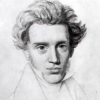
Soren Kierkegaard
Søren Aabye Kierkegaard; 5 May 1813 – 11 November 1855) was a Danish philosopher, theologian, poet, social critic and religious author who is widely considered to be the first existentialist philosopher. He wrote critical texts on organized religion, Christendom, morality, ethics, psychology, and the philosophy of religion, displaying a fondness for metaphor, irony and parables. Much of his philosophical work deals with the issues of how one lives as a "single individual", giving priority to concrete human reality over abstract thinking...
NationalityDanish
ProfessionPhilosopher
Date of Birth5 May 1813
CityCopenhagen, Denmark
CountryDenmark
Soren Kierkegaard quotes about
Only one human being recognized as one's neighbour is necessary in order to cure a man of self-love
We live as if we were unaware of our impending destruction
Love believes all things and yet is never deceived.
There is peace and rest and comfort in sorrow
When all combine in every way to make everything easier, people will want difficulty. I conceived it as my task to make difficulties everywhere.
Most people believe that the Christian commandments, e.g. to love one's neighbor as oneself, are intentionally a little too severe - like setting a clock half an hour ahead to make sure of not being late in the morning.
The present generation, wearied by its chimerical efforts, relapses into complete indolence. Its condition is that of a man who has only fallen asleep towards morning: first of all come great dreams, then a feeling of laziness, and finally a witty or clever excuse for remaining in bed.
It is not a gain that guilt should be wholly forgotten. On the contrary, it is loss and perdition. But it is a gain to win an inner intensity of heart through a deeper and deeper inner sorrowing over guilt.
That which is truly human no generation learns from the one before it. No generation learns from another how to love. No generation has a shorter task assigned to it except insofar as the previous generation shirked its task and deluded itself.
As the arrow, loosed from the bow by the hand of the practiced archer, does not rest till it has reached the mark, so men pass from God to God. He is the mark for which they have been created, and they do not rest till they find their rest in him.
The unhappy person is never present to themself because they always live in the past or the future.
The God that can be named is not God.
One is not unpopular because he uses peculiar expressions; that just so happens; such terms become a fad, and by and by everybody, down to the last simpleton, uses them. But a person who follows through an idea in his mind is, and always will be, essentially unpopular. That is why Socrates was unpopular, though he did not use any special terms, for to grasp and hold his 'ignorance' requires greater vital effort than understanding the whole of Hegel's philosophy.
Everyone looks the same to me in a photograph: stupid.