Soren Kierkegaard
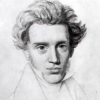
Soren Kierkegaard
Søren Aabye Kierkegaard; 5 May 1813 – 11 November 1855) was a Danish philosopher, theologian, poet, social critic and religious author who is widely considered to be the first existentialist philosopher. He wrote critical texts on organized religion, Christendom, morality, ethics, psychology, and the philosophy of religion, displaying a fondness for metaphor, irony and parables. Much of his philosophical work deals with the issues of how one lives as a "single individual", giving priority to concrete human reality over abstract thinking...
NationalityDanish
ProfessionPhilosopher
Date of Birth5 May 1813
CityCopenhagen, Denmark
CountryDenmark
Soren Kierkegaard quotes about
So to be sick unto death is, not to be able to die-yet not as though there were hope of life; no, the hopelessness in this case is that even the last hope, death, is not available. When death is the greatest danger, one hopes for life; but when one becomes acquainted with an even more dreadful danger, one hopes for death. So when the danger is so great that death has become one's hope, despair is the disconsolateness of not being able to die.
Listen to the cry of a woman in labor at the hour of giving birth - look at the dying man's struggle at his last extremity, and then tell me whether something that begins and ends thus could be intended for enjoyment.
Old age realizes the dreams of youth: look at Dean Swift; in his youth he built an asylum for the insane, in his old age he was himself an inmate.
Boredom rests upon the nothingness that winds its way through existence; its giddiness, like that which comes from gazing down into an infinite abyss, is infinite.
Certainty... lurks at the door of faith and threatens to devour it.
Take a chance and you may lose. Take not a chance and you have lost already.
Personality is only ripe when a man has made the truth his own.
This, then, is the ultimate paradox of thought: to want to discover something that thought itself cannot think.
It is a frightful satire and an epigram on the modern age that the only use it knows for solitude is to make it a punishment, a jail sentence.
At the bottom of enmity between strangers lies indifference.
A man may perform astonishing feats and comprehend a vast amount of knowledge, and yet have no understanding of himself. But suffering directs a man to look within. If it succeeds, then there, within him, is the beginning of his learning.
You live life looking forward, you understand life looking backward.
All moral elevation consists first and foremost of being weaned from the momentary.
It is intelligent to ask two questions: (1) Is it possible? (2) Can I do it?. But it is unintelligent to ask these questions: (1) Is it real? (2) Has my neighbor done it?