Sherwin B. Nuland
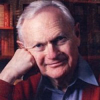
Sherwin B. Nuland
Sherwin Bernard Nulandwas an American surgeon and writer who taught bioethics, history of medicine, and medicine at the Yale School of Medicine, and occasionally bioethics and history of medicine at Yale College. His 1994 book How We Die: Reflections on Life's Final Chapter was a New York Times Best Seller and won the National Book Award for Nonfiction, as well as being a finalist for the Pulitzer Prize...
NationalityAmerican
ProfessionScientist
Date of Birth8 December 1930
CountryUnited States of America
Only by a frank discussion of the very details of dying can we best deal with those aspects that frighten us the most. It is by knowing the truth... that we rid ourselves of that fear of the terra incognita of death.
Both individual fulfillment and the ecological balance of life on this planet are best served by dying when our inherent biology decrees that we do.
The belief in the probability of death with dignity is our, and society’s, attempt to deal with the reality of what is all too frequently a series of destructive events that involve by their very nature the disintegration of the dying person’s humanity. I have not often seen much dignity in the process by which we die.
The dignity we seek in dying is not to be found in our final weeks, days or moments but in the way we live and how we are seen by those people whose lives we affect.
The good thing that may yet happen during dying is not the possibility of survival when we're beyond that point. The good thing that may yet happen is that our lives will have great meaning for those we leave behind.
I have not seen much dignity in the process by which we die. The quest to achieve true dignity fails when our bodies fail.
At times, morality can be dismissed as a matter of personal conscience, no matter how widespread its acceptance. Ethics, on the other hand, arises from societal or group commitments to principia of behavior.
Though President George W. Bush made some small noises about his intention to present some form of improved health coverage, nothing grew out of them.
Every hope of successive generations of scholars that order might be constructed from the chaotic mess of medical nomenclature has been frustrated. Even diseases recognized in the same historical period have been given names based on characteristics that have no relation to one another, and thus no common criteria.
The writings and the recommendations of the earliest medical scientists and the new breed of clinicians between the mid-fifteenth and early seventeenth centuries were based on the supposition that sufficient study and experimentation would elucidate not only the origins of disease, but its treatment as well.
I've seen so many patients, particularly elderly patients, over the years who become debilitated and changed by the process by which I cure them or another doctor cures them. And has it really been worth it?
Our deaths become a part of our lives in the sense that with our deaths we give something to those who are left behind, as we have given our lives to them.
Of all the named structures within the abdomen and the chest, those associated with reproduction retained the mysteries of their willful behavior long after others had been solved to the satisfaction of physicians and philosophers.
I have been following the attempt to initiate or revamp federal involvement in the health of Americans since it was a major topic for my high school debating team in 1947.