Sherwin B. Nuland
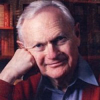
Sherwin B. Nuland
Sherwin Bernard Nulandwas an American surgeon and writer who taught bioethics, history of medicine, and medicine at the Yale School of Medicine, and occasionally bioethics and history of medicine at Yale College. His 1994 book How We Die: Reflections on Life's Final Chapter was a New York Times Best Seller and won the National Book Award for Nonfiction, as well as being a finalist for the Pulitzer Prize...
NationalityAmerican
ProfessionScientist
Date of Birth8 December 1930
CountryUnited States of America
The good thing that may yet happen during dying is not the possibility of survival when we're beyond that point. The good thing that may yet happen is that our lives will have great meaning for those we leave behind.
Though President George W. Bush made some small noises about his intention to present some form of improved health coverage, nothing grew out of them.
Every hope of successive generations of scholars that order might be constructed from the chaotic mess of medical nomenclature has been frustrated. Even diseases recognized in the same historical period have been given names based on characteristics that have no relation to one another, and thus no common criteria.
Do you know what the world will be saved by? I'll tell you. It'll be saved by the human spirit. And by the human spirit, I don't mean anything divine, I don't mean anything supernatural - certainly not coming from this skeptic.
We have had a rewarding relationship, the belly and I.
The dignity we seek in dying must be found in the dignity with which we have lived our lives.
Death belongs to the dying and those who love them.
I never had a conscious fear of death, but I did have a conscious fear of sickness. By the time I completed medical school, that fear was gone.
Both individual fulfillment and the ecological balance of life on this planet are best served by dying when our inherent biology decrees that we do.
Too many of the elderly do not have the family or the communal attachments necessary to feel valued; too many are widowed or otherwise alone; too many live in surroundings where they are essentially without the companionship necessary to stimulate a mind in danger of deteriorating.
Once the notion of depression had begun to dominate the diagnostic armamentarium, it became but a matter of time before patients with relatively mild disorders of mood or anxiety would be entered into it.
Not death but disease is the real enemy; disease, the malign force that requires confrontation. Death is the surcease that comes when the exhausting battle has been lost.
Only the emerging specialty of psychoanalysis seemed to understand that mental maladies are not fully analogous to physical disease. They resist classification, and might better be known by their symptoms and the individualized sufferings of patients than by assigned names.
Medical judgment can be taught - laboriously, in long periods of training - but it cannot be neatly handed over as the occasion demands it. It is the irreplaceable and untransferable contribution that the healer makes to the suffering individual who would be healed.