Sheldon Lee Glashow
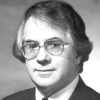
Sheldon Lee Glashow
Sheldon Lee Glashowis a Nobel Prize winning American theoretical physicist. He is the Metcalf Professor of Mathematics and Physics at Boston University and Higgins Professor of Physics, Emeritus, at Harvard University, and is a member of the Board of Sponsors for the Bulletin of the Atomic Scientists...
NationalityAmerican
ProfessionPhysicist
Date of Birth5 December 1932
CountryUnited States of America
basic nature particles people rules
People want to know about what's going on with what's in the universe, what are particles like, what are the basic rules of nature. It's a lot of curiosity out there.
came charmed existence found harvard john predicted research
In 1969, John Iliopoulos and Luciano Maiani came to Harvard as research fellows. Together, we found the arguments that predicted the existence of charmed hadrons.
began clearly coherent elementary particles separate separately taught theory weak
In 1956, when I began doing theoretical physics, the study of elementary particles was like a patchwork quilt. Electrodynamics, weak interactions, and strong interactions were clearly separate disciplines, separately taught and separately studied. There was no coherent theory that described them all.
failure gauge less period reasons several theory
I had more or less abandoned the idea of an electroweak gauge theory during the period 1961-1970. Of the several reasons for this, one was the failure of my naive foray into renormalizability.
cannot heads recognise scientists
Individual scientists cannot do much on their own. Heads of nations, corporates, and economic giants should recognise the criticality of it.
There's something called From 'Alchemy to Quarks,' which will teach you everything you have to know, you want to know, about physics.
biggest good prediction theories
String theory's biggest prediction is that gravity exists. That's good. That's a lot more than preceding theories could do.
history originated problem promising rather string technique theory understand wonderful
String theory has had a long and wonderful history. It originated as a technique to try to understand the strong force. It was a calculational mechanism, a way of approaching a mathematical problem that was too difficult, and it was a promising way, but it was only a technique. It was a mathematical technique rather than a theory in itself.
either next standard theory ultimate
The standard theory may survive as a part of the ultimate theory, or it may turn out to be fundamentally wrong. In either case, it will have been an important way-station, and the next theory will have to be better.
came dozen ear early elementary graduate harvard particle school students thesis time university
I came to graduate school at Harvard University in 1954. My thesis supervisor, Julian Schwinger, had about a dozen doctoral students at a time. Getting his ear was as difficult as it was rewarding. I called my thesis 'The Vector Meson in Elementary Particle Decays', and it showed an early commitment to an electroweak synthesis.
atom complex elementary revelation
One of the principal achievements of physics in the 20th century has been the revelation that the atom is not indivisible or elementary at all but has a complex structure.
nobel scientist thank wish
I wish to thank the Nobel Foundation for granting me the greatest honor to which a scientist may aspire.
bad care doctor interested might retrospect science spare taking time
My father said I should become a doctor and do science in my spare time, which in retrospect might not have been a bad idea, but I wasn't interested in taking care of people's ills.
It's a wonderful honor to win an Ignobel Prize.