Sheldon Lee Glashow
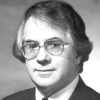
Sheldon Lee Glashow
Sheldon Lee Glashowis a Nobel Prize winning American theoretical physicist. He is the Metcalf Professor of Mathematics and Physics at Boston University and Higgins Professor of Physics, Emeritus, at Harvard University, and is a member of the Board of Sponsors for the Bulletin of the Atomic Scientists...
NationalityAmerican
ProfessionPhysicist
Date of Birth5 December 1932
CountryUnited States of America
among arguably attempting certainly consistent deals explains gravity particles physical physics string theorists theory
What the string theorists do is arguably physics. It deals with the physical world. They're attempting to make a consistent theory that explains the interactions we see among particles and gravity as well. That's certainly physics, but it's a kind of physics that is not yet testable.
either next standard theory ultimate
The standard theory may survive as a part of the ultimate theory, or it may turn out to be fundamentally wrong. In either case, it will have been an important way-station, and the next theory will have to be better.
began clearly coherent elementary particles separate separately taught theory weak
In 1956, when I began doing theoretical physics, the study of elementary particles was like a patchwork quilt. Electrodynamics, weak interactions, and strong interactions were clearly separate disciplines, separately taught and separately studied. There was no coherent theory that described them all.
failure gauge less period reasons several theory
I had more or less abandoned the idea of an electroweak gauge theory during the period 1961-1970. Of the several reasons for this, one was the failure of my naive foray into renormalizability.
history originated problem promising rather string technique theory understand wonderful
String theory has had a long and wonderful history. It originated as a technique to try to understand the strong force. It was a calculational mechanism, a way of approaching a mathematical problem that was too difficult, and it was a promising way, but it was only a technique. It was a mathematical technique rather than a theory in itself.
destroy energy issue question survive
The question of energy is an important one. The big issue is how to get it, how not to destroy the environment, and how to survive as a species. It's a big deal.
came dozen ear early elementary graduate harvard particle school students thesis time university
I came to graduate school at Harvard University in 1954. My thesis supervisor, Julian Schwinger, had about a dozen doctoral students at a time. Getting his ear was as difficult as it was rewarding. I called my thesis 'The Vector Meson in Elementary Particle Decays', and it showed an early commitment to an electroweak synthesis.
atom complex elementary revelation
One of the principal achievements of physics in the 20th century has been the revelation that the atom is not indivisible or elementary at all but has a complex structure.
nobel scientist thank wish
I wish to thank the Nobel Foundation for granting me the greatest honor to which a scientist may aspire.
bad care doctor interested might retrospect science spare taking time
My father said I should become a doctor and do science in my spare time, which in retrospect might not have been a bad idea, but I wasn't interested in taking care of people's ills.
attend concerned course general lectures string terribly theorists
There are physicists, and there are string theorists. Of course the string theorists are physicists, but the string theorists in general will not attend lectures on experimental physics. They will not be terribly concerned about the results of experiments. They will talk to one another.
course plane proving sort
Plane geometry is sort of the key course where you learn about proving things and abstraction.
biologists natural physicists scientists seeking types understanding various
I think that we scientists are seeking an understanding of the natural world. We come in various types - chemists and physicists and biologists and such - and we all have the same goal. We are making progress.
age bombs children committed countries interested physics war
I think that I got committed to physics at the age of - oh, it must have been 1942 - ten, when most countries were at war and children were interested in airplanes and bombs and such things.