Salvatore Quasimodo
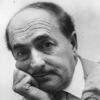
Salvatore Quasimodo
Salvatore Quasimodowas an Italian author and poet. In 1959 he won the Nobel Prize for Literature "for his lyrical poetry, which with classical fire expresses the tragic experience of life in our own times". Along with Giuseppe Ungaretti and Eugenio Montale, he is one of the foremost Italian poets of the 20th century...
NationalityItalian
ProfessionPoet
Date of Birth20 August 1901
CountryItaly
Salvatore Quasimodo quotes about
spiritual earth poetic
The poet's spoken discourse often depends on a mystique, on the spiritual freedom that finds itself enslaved on earth.
distance looks pages
The poet's other readers are the ancient poets, who look upon the freshly written pages from an incorruptible distance. Their poetic forms are permanent, and it is difficult to create new forms which can approach them.
order creative use
The Resistance is a moral certainty, not a poetic one. The true poet never uses words in order to punish someone. His judgment belongs to a creative order; it is not formulated as a prophetic scripture.
mean men mind
An exact poetic duplication of a man is for the poet a negation of the earth, an impossibility of being, even though his greatest desire is to speak to many men, to unite with them by means of harmonious verses about the truths of the mind or of things.
religious men expression
Religious poetry, civic poetry, lyric or dramatic poetry are all categories of man's expression which are valid only if the endorsement of formal content is valid.
religious struggle political
Religious power, which, as I have already said, frequently identifies itself with political power, has always been a protagonist of this bitter struggle, even when it seemingly was neutral.
country war men
War, I have always said, forces men to change their standards, regardless of whether their country has won or lost.
men people waiting
My readers at that time were still men of letters; but there had to be other people waiting to read my poems.
dark night yield
From the night, his solitude, the poet finds day and starts a diary that is lethal to the inert. The dark landscape yields a dialogue.
believe hero doe
The poet does not fear death, not because he believes in the fantasy of heroes, but because death constantly visits his thoughts and is thus an image of a serene dialogue.
order break-through circles
As the poet has expected, the alarms now are sounded, for - and it must be said again - the birth of a poet is always a threat to the existing cultural order, because he attempts to break through the circle of literary castes to reach the center.
age sound nuclear
At the point when continuity was interrupted by the first nuclear explosion, it would have been too easy to recover the formal sediment which linked us with an age of poetic decorum, of a preoccupation with poetic sounds.