Roger Ebert
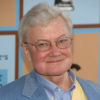
Roger Ebert
Roger Joseph Ebertwas an American film critic and historian, journalist, screenwriter, and author. He was a film critic for the Chicago Sun-Times from 1967 until his death in 2013. In 1975, Ebert became the first film critic to win the Pulitzer Prize for Criticism. As of 2010, his reviews were syndicated to more than 200 newspapers in the United States and abroad. Ebert also published more than 20 books and dozens of collected reviews...
NationalityAmerican
ProfessionJournalist
Date of Birth18 June 1942
CityUrbana, IL
CountryUnited States of America
Well, you know, a lot of modern directors and their movies are influenced by the flat lighting and textbook cutting style of television.
Here it is at last, the first 150-minute trailer. Armageddon is cut together like its own highlights. Take almost any 30 seconds at random, and you'd have a TV ad. The movie is an assault on the eyes, the ears, the brain, common sense, and the human desire to be entertained. No matter what they're charging to get in, it's worth more to get out.
You can have a movie with hardly any cuts, or very few cuts, that is fascinating, you can't take your eyes away from it... Look at some of the long takes in Citizen Kane.
The prevailing style in the mainstream is represented by Michael Bay. This is shorter and shorter takes and less and less dialogue.
What am I to think when six weekends of this year already have been won by slasher movies that were not screened for critics and got bad ratings on the tomato meter when they were screened?
The reason (Burton) wanted to make 'Ed Wood' is that Ed Wood had so much fun making movies. And that's where Ed Wood and Tim Burton connect. Tim Burton makes films that are a lot better, but he doesn't make them with any more love.
I believe that if, at the end of it all, according to our abilities, we have done something to make others a little happier, and something to make ourselves a little happier, that is about the best we can do.
We had lots of big fights, ... We were people who came together one day a week to work together and the other six days of the week we were competitors on two daily newspapers and two different television stations. So there was a lot of competition and a lot of disagreement.
The secret of the movie is that it doesn't strain to draw parallels with current world events - because it doesn't have to.
The target audience didn't care that we hated those movies because they just expected us to hate them.
Gene was a lifelong friend and our professional competition only strengthened that bond, ... He showed great bravery in the months after his surgery, continuing to work as long as he could.
Not only can I not describe the plot of this movie, but I have a feeling the last scene reverses half of what I thought I knew (or didn't know).
At three hours it is even operatic in length, as its themes unfold, its characters strive against the dying of the light, and the great wheel of chance rolls on toward them.
His career can be summed up as the case of a man who needed a financial manager.