Rebecca Solnit
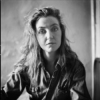
Rebecca Solnit
Rebecca Solnitis an American writer. She has written on a variety of subjects, including the environment, politics, place, and art. Solnit is a contributing editor at Harper's Magazine, where bi-monthly she writes the magazine's "Easy Chair" essay...
NationalityAmerican
ProfessionWriter
Date of Birth11 June 1961
CountryUnited States of America
real garden space
The poet Marianne Moore famously wrote of 'real toads in imaginary gardens,' and the labyrinth offers us the possibility of being real creatures in symbolic space...In such spaces as the labyrinth we cross over [between real and imaginary spaces]; we are really travelling, even if the destination is only symbolic.
two often-is perspective
We are often in two places at once. In fact we are usually in at least two places and occasionally the contrast is evident....Here, most often, is nothing more than the best perspective to contemplate there.
water diversity design
Places matter. Their rules, their scale, their design include or exclude civil society, pedestrianism, equality, diversity (economic and otherwise), understanding of where water comes from and garbage goes, consumption or conservation. They map our lives.
jobs dark artist
It is the job of artists to open doors and invite in prophesies, the unknown, the unfamiliar; it’s where their work comes from, although its arrival signals the beginning of the long disciplined process of making it their own. Scientists too, as J. Robert Oppenheimer once remarked, ‘live always at the ‘edge of mystery’—the boundary of the unknown.’ But they transform the unknown into the known, haul it in like fishermen; artists get you out into that dark sea.
political choices endorsements
Politics is pervasive. Everything is political and the choice to be "apolitical" is usually just an endorsement of the status quo and the unexamined life.
thinking doing-nothing done
Thinking is generally thought of as doing nothing in a production-oriented society, and doing nothing is hard to do. It's best done by disguising it as doing something, and the something closest to doing nothing is walking.
nature writing butterfly
In her novel Regeneration, Pat Barker writes of a doctor who 'knew only too well how often the early stages of change or cure may mimic deterioration. Cut a chrysalis open, and you will find a rotting caterpillar. What you will never find is that mythical creature, half caterpillar, half butterfly, a fit emblem of the human soul, for those whose cast of mind leads them to seek such emblems. No, the process of transformation consists almost entirely of decay.
self space despair
The bigness of the world is redemption. Despair compresses you into a small space, and a depression is literally a hollow in the ground. To dig deeper into the self, to go underground, is sometimes necessary, but so is the other route of getting out of yourself, into the larger world, into the openness in which you need not clutch your story and your troubles so tightly to your chest.
beautiful spring earthquakes
Revolution is as unpredictable as an earthquake and as beautiful as spring. Its coming is always a surprise, but its nature should not be.
earth pace unreliable
The Earth we evolved to inhabit is turning into something more turbulent and unreliable at a pace too fast for most living things to adapt to.
mean eras climate
We are entering an era of heightened disaster, thanks to climate change. Being prepared for disaster will mean being prepared to sift truth from rumour, and being prepared to adjust our worldview.
special promenade walking
The promenade is a special subset of walking.
thinking want sides
The things we want are transformative, and we don’t know or only think we know what is on the other side of that transformation Never to get lost is not to live.
pain care purpose
Pain serves a purpose. Without it you are in danger. What you cannot feel you cannot take care of.