Raymond Williams
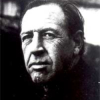
Raymond Williams
Raymond Henry Williamswas a Welsh academic, novelist and critic. He was an influential figure within the New Left and in wider culture. His writings on politics, culture, the mass media and literature are a significant contribution to the Marxist critique of culture and the arts. Some 750,000 copies of his books have sold in UK editions alone and there are many translations available. His work laid the foundations for the field of cultural studies and the cultural materialist approach...
NationalityWelsh
ProfessionNovelist
Date of Birth31 August 1921
The human crisis is always a crisis of understanding: what we genuinely understand we can do.
Country' and 'city' are very powerful words, and this is not surprising when we remember how much they seem to stand for in the experience of human communities. In English, 'country' is both a nation and a part of a 'land'; 'the country' can be the whole society or its rural area. In the long history of human settlements, this connection between the land from which directly or indirectly we all get our living and the achievements of human society has been deeply known.
Once we begin to speak of men mixing their labour with the earth, we are in a whole world of new relations between man and nature, and to separate natural history from social history becomes extremely problematic.
Every aspect of personal life is radically affected by the quality of general life, and yet the general life is seen at its most important in completely personal terms.
There are no masses; there are only ways of seeing people as masses
The idea of nature contains, though often unnoticed, an extraordinary amount of human history.
On the country has gathered the idea of a natural way of life: of peace, innocence, and simple virtue. On the city has gathered the idea of an achieved centre of learning, communication, light. Powerful hostile associations have also developed: on the city as a place of noise, worldliness and ambition; on the country as a place of backwardness, ignorance, limitation. A contrast between country and city, as fundamental ways of life, reaches back into classical times.
What is often being argued, it seems to me, in the idea of nature is the idea of man; and this not only generally, or in ultimate ways, but the idea of man in society, indeed the ideas of kinds of societies.
To be truly radical is to make hope possible rather than despair inevitable.
Culture is one of the two or three most complicated words in the English language.
The real dividing line between things we call work and the things we call leisure is that in leisure, however active we may be, we make our own choices and our own decisions. We feel for the time being that our life is our own.