Rabindranath Tagore
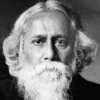
Rabindranath Tagore
Rabindranath Tagore FRAS, also written Ravīndranātha Thākura, sobriquet Gurudev, was a Bengali polymath who reshaped Bengali literature and music, as well as Indian art with Contextual Modernism in the late 19th and early 20th centuries. Author of Gitanjali and its "profoundly sensitive, fresh and beautiful verse", he became the first non-European to win the Nobel Prize in Literature in 1913. In translation his poetry was viewed as spiritual and mercurial; however, his "elegant prose and magical poetry" remain largely unknown...
NationalityIndian
ProfessionPoet
Date of Birth7 May 1861
CityKolkata, India
CountryIndia
When old words die out on the tongue, new melodies break forth from the heart; and where the old tracks are lost, new country is revealed with its wonders.
When I think of ages past That have floated down the stream Of life and love and death, I feel how free it makes us To pass away.
Let only that little be left of me whereby I may name thee my all. Let only that little be left of my will whereby I may feel thee on every side, and come to thee in everything, and offer to thee my love every moment. Let only that little be left of me whereby I may never hide thee. Let only that little of my fetters be left whereby I am bound with thy will, and thy purpose is carried out in my life--and that is the fetter of thy love.
For the current of our spiritual life creeds, rituals and channels that may thwart or help, according to their fixity or openness. When a symbol or spiritual idea becomes rigidly elaborate in its construction, it supplants the idea which it should support.
Life, like a child, laughs, shaking its rattle of death as it runs.
Melody and harmony are like lines and colors in pictures. A simple linear picture may be completely beautiful; the introduction of color may make it vague and insignificant. Yet color may, by combination with lines, create great pictures, so long as it does not smother and destroy their value.
Dreams can never be made captive.
Your idol is shattered in the dust to prove that God's dust is greater than your idol.
We sit inert, like dead specimens of some museum, while lessons are pelted at us from on high, like hailstones on flowers.
The meaning of the living words that come out of the experiences of great hearts can never be exhausted by any one system of logical interpretation. They have to be endlessly explained by the commentaries of individual lives, and they gain an added mystery in each new revelation.
If I call not thee in my prayers, if I keep not thee in my heart, thy love for me still waits for my love.
In love, at one of its poles you find the personal, and at the other the impersonal. At one you have the positive assertion - Here I am; at the other the equally strong denial - I am not. Without this ego what is love? And again, with only this ego how can love be possible? Bondage and liberation are not antagonistic in love. For love is most free and at the same time most bound. If God were absolutely free there would be no creation. The infinite being has assumed unto himself the mystery of finitude. And in him who is love the finite and the infinite are made one.
Days come and ages pass, and it is ever he who moves my heart in many a name, in many a guise, in many a rapture of joy and of sorrow. Deliverance is not for me in renunciation. I feel the embrace of freedom in a thousand bonds of delight.
Let the dead have the immortality of fame, but the living the immortality of love.