Plutarch
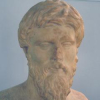
Plutarch
Plutarch; c. AD 46 – AD 120) was a Greek historian, biographer, and essayist, known primarily for his Parallel Lives and Moralia. He is classified as a Middle Platonist. Plutarch's surviving works were written in Greek, but intended for both Greek and Roman readers...
NationalityGreek
ProfessionPhilosopher
friendship change philosophy
I don't need a friend who changes when I change and who nods when I nod; my shadow does that much better.
inspirational leadership education
The mind is not a vessel to be filled but a fire to be kindled.
freedom tyrants economic-inequality
An imbalance between rich and poor is the oldest and most fatal ailment of all republics.
beautiful giving wish
As in the case of painters, who have undertaken to give us a beautiful and graceful figure, which may have some slight blemishes, we do not wish then to pass over such blemishes altogether, nor yet to mark them too prominently. The one would spoil the beauty, and the other destroy the likeness of the picture.
water firsts dread
Athenodorus says hydrophobia, or water-dread, was first discovered in the time of Asclepiades.
brother silly two
There were two brothers called Both and Either; perceiving Either was a good, understanding, busy fellow, and Both a silly fellow and good for little, Philip said, "Either is both, and Both is neither.
firsts saws assault
After he routed Pharnaces Ponticus at the first assault, he wrote thus to his friends: "I came, I saw, I conquered.
rising pompey sun
Pompey bade Sylla recollect that more worshipped the rising than the setting sun.
plato rivers gold
Cicero called Aristotle a river of flowing gold, and said of Plato's Dialogues, that if Jupiter were to speak, it would be in language like theirs.
silence tongue remember
Remember what Simonides said, that he never repented that he had held his tongue, but often that he had spoken.
men spokes mets
Spintharus, speaking in commendation of Epaminondas, says he scarce ever met with any man who knew more and spoke less.
sea wealth enough
Lampis, the sea commander, being asked how he got his wealth, answered, "My greatest estate I gained easily enough, but the smaller slowly and with much labour.
From Themistocles began the saying, "He is a second Hercules.
character mean men
By the study of their biographies, we receive each man as a guest into our minds, and we seem to understand their character as the result of a personal acquaintance, because we have obtained from their acts the best and most important means of forming an opinion about them. "What greater pleasure could'st thou gain than this?" What more valuable for the elevation of our own character?