Noam Chomsky
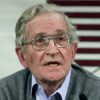
Noam Chomsky
Avram Noam Chomskyis an American linguist, philosopher, cognitive scientist, historian, logician, social critic, and political activist. Sometimes described as "the father of modern linguistics", Chomsky is also a major figure in analytic philosophy, and one of the founders of the field of cognitive science. He has spent more than half a century at the Massachusetts Institute of Technology, where he is Institute Professor Emeritus, and is the author of over 100 books on topics such as linguistics, war, politics, and...
NationalityAmerican
ProfessionTeacher
Date of Birth7 December 1928
CityPhiladelphia, PA
CountryUnited States of America
You keep plugging away--that's the way social change takes place. That's the way every social change in history has taken place: by a lot of people, who nobody ever heard of, doing work.
Whoever sets the agenda controls the outcome of the debate
The person who wins the Nobel Prize is not the person who read the most journal articles and took the most notes on them. It's the person who knew what to look for. And cultivating that capacity to seek what's significant, always willing to question whether you're on the right track - that's what education is going to be about, whether it's using computers and the Internet, or pencil and paper, or books.
Technology is usually fairly neutral. It’s like a hammer, which can be used to build a house or to destroy someone’s home. The hammer doesn’t care. It is almost always up to us to determine whether the technology is good or bad.
If you want to become a biologist, it doesn't help to go into the Harvard biology library and all the information is there for you. You have to know what to look for and the internet is the same, just magnified.
Anarcho-syndic alism took for granted that working people ought to control their own work, its conditions, the enterprises in which they work, along with communities, so they should be associated with one another in free associations, and democracy of that kind should be the foundational elements of a more general free society.
The war against working people should be understood to be a real war…. Specifically in the U.S., which happens to have a highly class-conscious business class…. And they have long seen themselves as fighting a bitter class war, except they don’t want anybody else to know about it.
Technology is basically neutral. It's kind of like a hammer. The hammer doesn't care whether you use it to build a house, or whether a torturer uses it to crush somebody's skull.
Modern science and technology can relieve men of the necessity for specialized, imbecile labor. They may, in principle, provide the basis for a rational social order based on free association and democratic control, if we have the will to create it.
As for geoengineering, there have been serious general critiques that I think cannot be ignored, like Clive Hamilton's, along with many positive assessments. It is not a matter for subjective judgment based on guesswork and intuition. Rather, these are matters that have to be considered seriously, relying on the best scientific understanding available, without abandoning sensible precautionary principles.
Suppose that, say, China established military bases in Colombia to carry out chemical warfare in Kentucky and North Carolina to destroy this lethal crop [tobacco] that is killing huge numbers of Chinese.
Hamas is regularly described as 'Iranian-backed Hamas, which is dedicated to the destruction of Israel.' One will be hard put to find something like 'democratically elected Hamas, which has long been calling for a two-state settlement in accord with the international consensus'—blocked for over 30 years by the US and Israel. All true, but not a useful contribution to the Party Line, hence dispensable.
Governments are not representative.
Sea level rise and destruction of water resources as glaciers melt alone may have horrendous human consequences.