Miguel Nicolelis
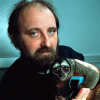
Miguel Nicolelis
Miguel Ângelo Laporta Nicolelis, M.D., P.hD, is a Brazilian scientist and physician, best known for his pioneering work in "reading monkey thought". He and his colleagues at Duke University implanted electrode arrays into a monkey's brain that were able to detect the monkey's motor intent and thus able to control reaching and grasping movements performed by a robotic arm. This was possible by decoding signals of hundreds of neurons recorded in volitional areas of the cerebral cortex while the monkey...
NationalityBrazilian
ProfessionScientist
Date of Birth7 March 1961
CountryBrazil
With its billions of interconnected neurons, whose interactions change from millisecond to millisecond, the human brain is an archetypal complex system.
We have about 100 million cells interconnected in our brains. They communicate with one another through electrical signals.
We cannot even predict what kinds of emergent properties would appear when animals begin interacting as part of a brain-net. In theory, you could imagine that a combination of brains could provide solutions that individual brains cannot achieve by themselves.
We want to galvanize people's imaginations. With enough political will and investment, we could make wheelchairs obsolete.
Eventually, brain implants will become as common as heart implants. I have no doubt about that.
I think the word 'soul' - it depends on what you define by 'soul.' If you're defining it as a mystical aura that is outside the body, I cannot measure that. If you're talking about soul as human nature, the rank of spectrum of behaviors and reactions that we know humans produce under certain circumstances, that is measurable.
There are several patients - there are thousands of patients, tens of thousands of patients, that carry either a stimulator in the brain or in the periphery, in the inner ear, to restore neurological functions or to control diseases like Parkinson's disease.
We want kids to think that they can think about science. They don't need to just play soccer.
We started all this research way back in the early 1990s, developing a technique that allows us to record the electrical signals produced by neurons simultaneously.
I have no military application in my research. You know, we are all involved into rehabilitation medicine.
In my view, while the single neuron is the basic anatomical and information processing-signaling unit of the brain, it is not capable of generating behaviors and, ultimately, thinking. Instead, the true functional unit of the central nervous system is a population of neurons, or neural ensembles or cell assemblies.
The brain needs to have a story; it needs to have a logical screenplay telling where we're coming from and what we're going to.
Essentially, all expressions of human nature ever produced, from a caveman's paintings to Mozart's symphonies and Einstein's view of the universe, emerge from the same source: the relentless dynamic toil of large populations of interconnected neurons.
It's the first time an exoskeleton has been controlled by brain activity and offered feedback to the patients. Doing a demonstration in a stadium is something very much outside our routine in robotics. It's never been done before.