Margaret Chan
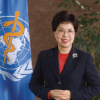
Margaret Chan
Margaret Chan Fung Fu-chun, OBE, JPis a Hong Kong Chinese and Canadian physician, who serves as the Director-General of the World Health Organizationfor 2006–17. Chan was elected by the Executive Board of WHO on 8 November 2006, and was endorsed in a special meeting of the World Health Assembly on the following day. Chan has previously served as Director of Health in the Hong Kong Government, representative of the WHO Director-General for Pandemic Influenza and WHO Assistant Director-General for Communicable...
NationalityChinese
ProfessionPublic Servant
CountryChina
The International Health Partnership Plus is addressing the need to harmonize development assistance and reduce the current waste, duplication, and high transaction costs.
SARS was a very important event... And many countries have learned from SARS... The SARS event sort of gave them additional impetus and the sense of urgency for them to really revise the International Health Regulations.
The World Health Organization did a world health report in 2006. In the whole world about 60 countries are in dire situation in terms of having enough doctors. And many of these countries are in Sub-Saharan Africa. You know, that part of the world alone needs one million doctors.
Buying time will allow us to fast-track pandemic vaccine production. It will allow governments to put in place a host of emergency public health measures that will reduce mortality and morbidity, and social and economic disruption.
There is a high degree of support for voluntary compliance with the International Health Regulations. It will help countries to build capacity.
WHO has a country office in nearly every developing country, usually located close to the Ministry of Health. Staff in these offices need to do much more to help ministries of health strengthen their national health plans and strategies and then negotiate with development partners to support these priorities and follow these plans.
That was a time when we were really working together as an international community of academics, politicians, public health experts. Everybody really was so focused,
I must stress that it is still a suspected case at this stage and the experts are still investigating,
When is the next time? We don't have a time frame. I suspect it will likely to be November, if history is anything to go by.
During the past week, indeed new confirmed cases have shown a downward trend. The situation has stabilized, ... Our estimation is that this is a result achieved through concerted efforts from all quarters.
While we cannot predict when or if the H5N1 virus might spark a pandemic, we cannot ignore the warning signs, ... For the first time in human history, we have a chance to prepare ourselves for a pandemic before it arrives.
We cannot think of the old days when we were dealing with SARS. It's a totally different ballgame now.
With increased surveillance its not unusual that you would pick up more cases.
Based on assessment of all available information and following several expert consultations, I have decided to raise the current level of influenza pandemic alert from phase 4 to phase 5.