Mahatma Gandhi
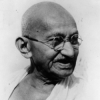
Mahatma Gandhi
Mohandas Karamchand Gandhi; 2 October 1869 – 30 January 1948) was the preeminent leader of the Indian independence movement in British-ruled India. Employing nonviolent civil disobedience, Gandhi led India to independence and inspired movements for civil rights and freedom across the world. The honorific Mahatma—applied to him first in 1914 in South Africa,—is now used worldwide. He is also called Bapuin India. In common parlance in India he is often called Gandhiji. He is unofficially called the Father of the Nation...
NationalityIndian
ProfessionCivil Rights Leader
Date of Birth2 October 1869
CityPortbandar, India
CountryIndia
A non-violent revolution is not a program of seizure of power. It is a program of transformation of relationships, ending in a peaceful transfer of power.
Our peaceful non-co-operation must be constructive, non-destructive. Poison should not emerge from the throes of love.
If we are to create peace in our world, we must begin with our children.
There is no path to peace; peace is the path.
Complete civil disobedience is a state of peaceful rebellion, a refusal to obey every single state-made law.
If Swaraj is to be had by peaceful methods, it will only be attained by attention to every little detail of national life.
I invite even the school of violence to give this peaceful non-co-operation a trial.
The restoration of spinning to its central place in India's peaceful campaign for deliverance from the imperial yoke gives her women a special status.
In Gujarat Hitler's life and works have been glorified in school textbooks which is a very serious matter,
The mice which helplessly find themselves between the cats' teeth acquire no merit from their enforced sacrifice
What is true is that honesty is incompatible with the amassing of a large fortune
Anger and intolerance are the twin enemies of correct understanding
An eye for eye only ends up making the whole world blind.
An eye for an eye would make the whole world blind.