Lord Acton
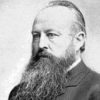
Lord Acton
John Emerich Edward Dalberg-Acton, 1st Baron Acton, KCVO DL—known as Sir John Dalberg-Acton, 8th Baronet from 1837 to 1869 and usually referred to simply as Lord Acton—was an English Catholic historian, politician, and writer. He was the only son of Sir Ferdinand Dalberg-Acton, 7th Baronet and a grandson of the Neapolitan admiral Sir John Acton, 6th Baronet. He is perhaps best known for the remark, "Power tends to corrupt, and absolute power corrupts absolutely. Great men are almost always bad...
NationalityBritish
ProfessionHistorian
Date of Birth10 January 1834
Ink was not invented to express our real feelings.
Feudalism made land the measure and the master of all things.
Every thing secret degenerates, even the administration of justice; nothing is safe that does not show how it can bear discussion and publicity.
It is very easy to speak words of wisdom from a comfortable distance, when one sees no reality, no details, none of the effect on men's minds.
Liberty is not the power of doing what we like, but the right to do what we ought.
To be able to look back upon one's past life with satisfaction is to live twice.
The one pervading evil of democracy is the tyranny of the party that succeeds, by force or fraud, in carrying elections.
Remember that one touch of ill-nature makes the whole world kin.
Political differences essentially depend on disagreement in moral principles.
Piety sometimes gives birth to scruples, and faith to superstition, when they are not directed by wisdom and knowledge.
Monarchy hardens into despotism. Aristocracy contracts into oligarchy. Democracy expands into the supremacy of numbers.
Many things are better for silence than for speech: others are better for speech than for stationery.
In England Parliament is above the law. In America the law is above Congress.
The epoch of doubt and transition during which the Greeks passed from the dim fancies of mythology to the fierce light of science was the age of Pericles, and the endeavour to substitute certain truth for the prescriptions of impaired authorities, which was then beginning to absorb the energies of the Greek intellect, is the grandest movement in the profane annals of mankind, for to it we owe, even after the immeasurable progress accomplished by Christianity, much of our philosophy and far the better part of the political knowledge we possess.