Kenneth Scott Latourette
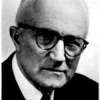
Kenneth Scott Latourette
Kenneth Scott Latourettewas an American historian of China, Japan, and world Christianity. His formative experiences as Christian missionary and educator in early 20th century China shaped his life's work. Although he did not learn the Chinese language, he became known for his magisterial scholarly surveys of the history of world Christianity, the history of China, and of American relations with East Asia...
NationalityAmerican
ProfessionHistorian
Date of Birth6 August 1884
CountryUnited States of America
In contrast, Christianity, while acknowledging the presence of suffering, declares that life can be infinitely worth living and opens the way to eternal life in fellowship with God Who so loved the world that He gave Himself in Christ.
THE NINETEENTH CENTURY SPREAD OF CHRISTIANITY WAS DUE PRIMARILY TO A NEW BURST OF RELIGIOUS LIFE EMANATING FROM THE CHRISTIAN IMPULSE. . . . NEVER IN ANY CORRESPONDING LENGTH OF TIME HAD THE CHRISTIAN IMPULSE GIVEN RISE TO SO MANY NEW MOVEMENTS. NEVER HAD IT HAD QUITE SO GREAT AN EFFECT UPON WESTERN EUROPEAN PEOPLES. IT WAS FROM THIS ABOUNDING VIGOR THAT THERE ISSUED THE MISSIONARY ENTERPRISE WHICH DURING THE NINETEENTH CENTURY SO AUGMENTED THE NUMERICAL STRENGTH AND THE INFLUENCE OF CHRISTIANITY.
We know something of the history of the spread of Christianity, but much passed from recorded memory and much was transmitted by tradition whose accuracy has been repeatedly questioned.
Although when Christianity appeared the total population of the planet was only a fraction of that of the twentieth century, most of the earth's surface was quite outside the Mediterranean world, Persia, India, and China.
The Psalms, the anthology of the hymns of Israel, are still used by Christians.
When contrasted with the much longer time that life has been present, the course of Christianity thus far is but a brief moment.
The prophets and the writers of the Psalms were clear that God was continuing to work in the universe and in all history. They declared that He had created the universe.
The history of Christianity, therefore, must be of concern to all who are interested in the record of man and particularly to all who seek to understand the contemporary human scene.
However incompatible the spirit of Jesus and armed force may be, and however unpleasant it may be to acknowledge the fact, as a matter of plain history the latter has often made it possible for the former to survive.
It is not His teachings which make Jesus so remarkable, although these would be enough to give Him distinction. It is a combination of the teachings with the man Himself. The two cannot be separated.
That free will was demonstrated in the placing of temptation before man with the command not to eat of the fruit of the tree which would give him a knowledge of good and evil, with the disturbing moral conflict to which that awareness would give rise.
As the centuries pass, the evidence is accumulating that, measured by His effect on history, Jesus is the most influential life ever lived on this planet.