John Boyd Orr
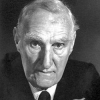
John Boyd Orr
John Boyd Orr, 1st Baron Boyd-Orr CH, DSO, MC, FRS, known as Sir John Boyd Orr from 1935 to 1949, was a Scottish teacher, doctor, biologist and politician who received the Nobel Peace Prize for his scientific research into nutrition and his work as the first Director-General of the United Nations Food and Agriculture Organization. He was the co-founder and the first Presidentof the World Academy of Art and Science...
NationalityScottish
ProfessionPolitician
Date of Birth23 September 1880
John Boyd Orr quotes about
powerful war weapons
Science has produced such powerful weapons that in a war between great powers there would be neither victor nor vanquished. Both would be overwhelmed in destruction.
people politics sandwiches
If people have to choose between freedom and sandwiches they will take sandwiches.
past animal records
Knowledge acquired in biological research is seldom directly applicable to human beings ... The results of scientific research, obtained under these conditions, cannot be applied directly to human beings who vary widely in their hereditary make-up, in their environment, and in their past health record.
government use world
In recent times, European nations, with the use of gunpowder and other technical improvements in warfare, controlled practically the whole world. One, the British Empire, brought under one government a quarter of the earth and its inhabitants.
airplane government political
As I have tried to show, science, in producing the airplane and the wireless, has created a new international political environment to which governments must adjust their foreign policies.
war mad hatred
It is said that those whom the gods wish to destroy they first make mad. It may well be that a war neurosis stirred up by propaganda of fear and hatred is the prelude to destruction.
appreciate arms territory
The increase of territory and power of empires by force of arms has been the policy of all great powers, and it has always been possible to get the approval of their state religion.
civilization unity age
Our civilization is now in the transition stage between the age of warring empires and a new age of world unity and peace.
creating demand revolution
When the Industrial Revolution of the nineteenth century brought a rapid increase in wealth, the demand of workers for a fair share of the wealth they were creating was conceded only after riots and strikes.
social-unrest fabric revolution
When the fabric of society is so rigid that it cannot change quickly enough, adjustments are achieved by social unrest and revolutions.
believe long political
There can be no peace in the world so long as a large proportion of the population lack the necessities of life and believe that a change of the political and economic system will make them available. World peace must be based on world plenty.
canada capacity hundred increased last market outside production united war
During the last war when there was a market for everything that could be produced, the production capacity of Canada and the United States, which were outside the battle area, increased one hundred percent.
empires fallen five internal last six thousand wars waxed
In the last five or six thousand years, empires one after another have arisen, waxed powerful by wars of conquest, and fallen by internal revolution or attack from without.
brought changes fall general increase knowledge principles rise social survived though
Though the general principles of statecraft have survived the rise and fall of empires, every increase in knowledge has brought about changes in the political, economic, and social structure.