Jeff Bagwell
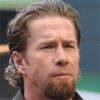
Jeff Bagwell
Jeffrey Robert Bagwellis an American former professional baseball first baseman and coach who spent his entire fifteen-year Major League Baseballplaying career with the Houston Astros. Originally, the Boston Red Sox selected him from the University of Hartford as a third baseman in the fourth round of the 1989 amateur draft. The Red Sox traded Bagwell to the Astros in 1990; the next season he made his MLB debut and was named the National LeagueRookie of the Year. The NL Most...
ProfessionBaseball Player
Date of Birth27 May 1968
CityBoston, MA
Easier said than done, ... It's not like the guy is throwing soft toss to me. It's hard in those situations. I loved the opportunity, and I wish I had the at-bat over again. That's just not the way it is.
It feels like there is still something lodged in there, but it does feel better, and the guys who are watching say it looks a lot better. I've got a ways to go. I've got to be able to maintain my throwing throughout the spring training if I'm going to be able to play during the season.
We talked about taking a month or so to try to strengthen my shoulder and try to see how my shoulder reacted to non-baseball things. Not throwing a baseball, not hitting a baseball every day.
I swung at a couple of high fastballs, but I'm getting the bat head there. I just need to get the ball down a little bit. He's a guy that just comes in and throws hard. Whether you have 35 or 40 postseason at-bats, a guy throwing 100 miles per hour, it's not that easy.
I swung at a couple of high fastballs, but I'm getting the bat head there, ... I just need to get the ball down a little bit. He's a guy that just comes in and throws hard. Whether you have 35 or 40 postseason at-bats, a guy throwing 100 miles per hour, it's not that easy.
You know, I am not fragile of mind, ... Just because I've been out, this is the kind of opportunity I love. But when a guy's throwing 100, it's pretty tough to catch up with it. And if he throws a cutter at 100 ... man, that's not easy.
I think my swing is there. I hold on with two hands. I'm not having to let go because I'm restricted from getting out there. My hitting will come. The major focus of this black cloud that's sitting over this locker is that throwing arm. If it starts hurting bad enough where it's affecting my swing, we're going to have another talk.
It's just a natural progression right now. I'm throwing a little bit between innings and getting my at-bats.
What led me to this (decision) was the tremendous amount of pain that I just couldn't deal with anymore. I played a couple of days in a row. I came out that first game. Then I played a couple days and I got through it. And I was like, 'All right, let's see what's happening here.' I had to come out of the game in Detroit.
This was what we wanted to do, ... We spent a lot of time in this city and this organization trying to get to this particular point.
You have to be a little nervous in that situation. It was a big moment, and it's a win we needed.
Towards the end of my career, I didn't want an opportunity like this to go by.
Eventually, he and I are going to have to sit down and talk. When that is, we'll figure it out at some point.
We win that game, it changes the whole series. But the bottom line is, we didn't, and we've got to deal with that.