Jane Yolen
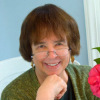
Jane Yolen
Jane Hyatt Yolenis an American writer of fantasy, science fiction, and children's books. She is the author or editor of more than 280 books, of which the best known is The Devil's Arithmetic, a Holocaust novella. Her other works include the Nebula Award-winning short story Sister Emily's Lightship, the novelette Lost Girls, Owl Moon, The Emperor and the Kite, the Commander Toad series and How Do Dinosaurs Say Goodnight. She gave the lecture for the 1989 Alice G. Smith Lecture,...
NationalityAmerican
ProfessionYoung Adult Author
Date of Birth11 February 1939
CityNew York City, NY
CountryUnited States of America
I don't care whether the story is real or fantastical. I tell the story that needs to be told.
While I was in junior high, I wrote an entire essay in rhyme about manufacturing in New York State. In high school, I won a Scholastic poetry contest.
Write every day. You don't have to write about anything specific, but you should exercise your writing muscle constantly.
Why am I working so hard? Going for 400 books, perhaps, but who's really counting?
When you realize my best selling books are 'Owl Moon,' the 'How Do Dinosaur' books, and 'Devil's Arithmetic,' how can the public make sense of that! I have fans who think I only write picture books or only write SF and fantasy. I have fanatics of my poetry and are stunned to find out I write prose, too!
You write to be read. That is the bottom line.
Time may heal all wounds, but it does not erase the scars.
It is the last thing we learn, / listening to the creature world...
A mist. A great mist. It covered the entire kingdom. And everyone in it - the good people and the not so good, the young people and the not-so-young, and even Briar Rose's mother and father fell asleep. Everyone slept: lords and ladies, teacher and tummlers, dogs and doves, rabbits and rabbitzen and all kinds of citizens. So fast asleep they were, they were not able to wake up for a hundred years.
Just write. If you have to make a choice, if you say, 'Oh well, I'm going to put the writing away until my children are grown,' then you don't really want to be a writer. If you want to be a writer, you do your writing... If you don't do it, you probably don't want to be a writer, you just want to have written and be famous—which is very different.
But as the scissors snip-snapped through her hair and the razor shaved the rest, she realized with a sudden awful panic that she could no longer recall anything from the past. I cannot remember, she whispered to herself. I cannot remember. She's been shorn of memory as brutally as she'd been shorn of her hair, without permission, without reason... Gone, all gone, she thought again wildly, no longer even sure what was gone, what she was mourning.
And for adults, the world of fantasy books returns to us the great words of power which, in order to be tamed, we have excised from our adult vocabularies. These words are the pornography of innocence, words which adults no longer use with other adults, and so we laugh at them and consign them to the nursery, fear masking as cynicism. These are the words that were forged in the earth, air, fire, and water of human existence, and the words are: Love. Hate. Good. Evil. Courage. Honor. Truth.
You are a name, not a number. Never forget that name, whatever they tell you here. You will always be Chaya—life—to me.
In fantasy stories we learn to understand the differences of others, we learn compassion for those things we cannot fathom, we learn the importance of keeping our sense of wonder. The strange worlds that exist in the pages of fantastic literature teach us a tolerance of other people and places and engender an openness toward new experience. Fantasy puts the world into perspective in a way that 'realistic' literature rarely does. It is not so much an escape from the here-and-now as an expansion of each reader's horizons.