Hjalmar Branting
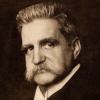
Hjalmar Branting
Karl Hjalmar Branting was a Swedish politician. He was the leader of the Swedish Social Democratic Party, and Prime Minister during three separate periods. When Branting came to power in 1920, he was the first Social Democratic Prime Minister of Sweden. When he took office for a second term after the general election of 1921, he became the first socialist politician in Europe to do so following elections with universal suffrage. In 1921, Sweden's Prime Minister Hjalmar Branting shared the Peace...
NationalitySwedish
ProfessionPolitician
Date of Birth23 November 1860
CityStockholm, Sweden
CountrySweden
All in all, the League of Nations is not inevitably bound, as some maintain from time to time, to degenerate into an impotent appendage of first one, then another of the competing great powers
Last year, the Assembly of the League, as a result of the initiative taken by the Scandinavian nations, further limited and clarified all the provisions of the clause prescribing the duty of states to participate in sanctions
No nation is so great as to be able to afford, in the long run, to remain outside an increasingly universal League of Nations
We here in the North have for many years had a natural tendency to feel that when our representatives come together at an international meeting, we embark on the quest of mutual understanding and support
A formally recognized equality does, however, accord the smaller nations a position which they should be able to use increasingly in the interest of humanity as a whole and in the service of the ideal
Let us return, however, to the League of Nations. To create an organization which is in a position to protect peace in this world of conflicting interests and egotistic wills is a frighteningly difficult task
As long as the problem of world reconstruction remains the center of interest for all nations, blocs having similar attitudes will form and operate even within the League itself.
The equality among all members of the League, which is provided in the statutes giving each state only one vote, cannot of course abolish the actual material inequality of the powers concerned.
And the annual meetings of the League's Assembly are in effect official peace congresses binding on the participating states to an extent that most statesmen a quarter of a century ago would have regarded as utopian.