Henry Cabot Lodge
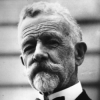
Henry Cabot Lodge
Henry Cabot Lodgewas an American Republican Senator and historian from Massachusetts. Lodge received his PhD in history from Harvard. Lodge was a long-time friend and confidant of Theodore Roosevelt. Lodge had the roleof the first Senate Majority Leader. He is best known for his positions on foreign policy, especially his battle with President Woodrow Wilson in 1919 over the Treaty of Versailles. Lodge demanded Congressional control of declarations of war; Wilson refused and blocked Lodge's move to ratify the treaty...
NationalityAmerican
ProfessionPolitician
Date of Birth12 May 1850
CountryUnited States of America
Membership of the United Nations gives every member the right to make a fool of himself, and that is a right of which the Soviet Union in this case has taken full advantage.
She has great problems of her own to solve, very grim and perilous problems, and a right solution, if we can attain to it, would largely benefit mankind.
Look at the United States today. We have made mistakes in the past. We have had shortcomings. We shall make mistakes in the future and fall short of our own best hopes.
Our ideal is to make her ever stronger and better and finer, because in that way alone, as we believe, can she be of the greatest service to the world's peace and to the welfare of mankind.
If that for which the Spanish Empire has stood since the days of Charles V is right, then everything for which the United States stands and has always stood is wrong.
It has been well said that a hungry man is more interested in four sandwiches than four freedoms.
The fact that the talk may be boring or turgid or uninspiring should not cause us to forget the fact that it is preferable to war.
For we, too, have our ideals, even if we differ from those who have tried to establish a monopoly of idealism.
You may call me selfish if you will, conservative or reactionary, or use any other harsh adjective you see fit to apply, but an American I was born, an American I have remained all my life.
It sets its face rightfully against the doctrines of the Anarchist and the Communist, who seek to solve the social problems not by patient endeavor, but by brutal destruction.
Internationalism, illustrated by the Bolshevik and by the men to whom all countries are alike provided they can make money out of them, is to me repulsive.
If a man is going to be an American at all let him be so without any qualifying adjectives, and if he is going to be something else, let him drop the word American from his personal description.
True Americanism recognizes the enormous gravity of the social and labor problems which confront us.
We would not have our politics distracted and embittered by the dissensions of other lands.