Henry A. Kissinger
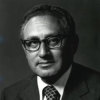
Henry A. Kissinger
Henry Alfred Kissingeris an American diplomat and political scientist. He served as National Security Advisor and later concurrently as United States Secretary of State in the administrations of presidents Richard Nixon and Gerald Ford. For his actions negotiating the ceasefire in Vietnam, Kissinger received the 1973 Nobel Peace Prize under controversial circumstances, with two members of the committee resigning in protest. Kissinger later sought, unsuccessfully, to return the prize. After his term, his advice has been sought by world leaders...
NationalityGerman
ProfessionStatesman
Date of Birth27 May 1923
CountryGermany
World population needs to be decreased by 50%
To have the United States suddenly come up with a peace proposal after a whole series of terrorist attacks is going to show to the world that this sort of method is something that western societies can't stand.
You can't make war in the Middle East without Egypt and you can't make peace without Syria.
It is, after all, the responsibility of the expert to operate the familiar and that of the leader to transcend it.
Control oil and you control nations; control food and you control the people.
The art of good foreign policy is to understand and to take into consideration the values of a society, to realize them at the outer limit of the possible.
America has no permanent friends or enemies, only interests
A return to the 1967 lines and the abandonment of the settlements near Jerusalem would be such a psychological trauma for Israel as to endanger its survival.
Realism in foreign policy means careful consideration of all aspects pertinent to the issue, before taking a decision. This is the only way you can move from where you are to someplace else.
No one will ever win the battle of the sexes; there's too much fraternizing with the enemy.
Ninety percent of the politicians give the other ten percent a bad reputation.
A leader does not deserve the name unless he is willing occasionally to stand alone.
Realism in foreign policy is made up of a clear set of values, since difficult foreign policy decisions are often decided with the narrowest of majorities. Without any sense of what is right and wrong, one would drown in a flood of difficult and pragmatic decisions.
Let us fashion together a new world order.