Henry A. Kissinger
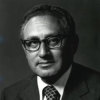
Henry A. Kissinger
Henry Alfred Kissingeris an American diplomat and political scientist. He served as National Security Advisor and later concurrently as United States Secretary of State in the administrations of presidents Richard Nixon and Gerald Ford. For his actions negotiating the ceasefire in Vietnam, Kissinger received the 1973 Nobel Peace Prize under controversial circumstances, with two members of the committee resigning in protest. Kissinger later sought, unsuccessfully, to return the prize. After his term, his advice has been sought by world leaders...
NationalityGerman
ProfessionStatesman
Date of Birth27 May 1923
CountryGermany
One has to remember that every progress that has been made towards peace in the Middle East has come under American leadership.
Superstars strive for approbation; heroes walk alone. Superstars crave consensus; heroes define themselves by the judgment of a future they see it as their task to bring about. Superstars seek success in a technique for eliciting support; heroes pursue success as the outgrowth of inner values.
Every civilization that has ever existed has ultimately collapsed.
I do not stand on protocol. If you just call me Excellency, it will be okay.
The Russian empire under czars and commissars has been hard to deal with for other countries.
The history of things that didn't happen has never been written.
With proper tactics, nuclear war need not be as destructive as it appears.
Most high officials leave office with the perceptions and insights with which they entered ...
Whenever a new president comes in, people that are used to the previous president wonder if he has the same capacity.
Nixon had three goals: to win by the biggest electoral landslide in history; to be remembered as a peacemaker; and to be accepted by the 'Establishment' as an equal. He achieved all these objectives at the end of 1972 and the beginning of 1973. And he lost them all two months later-partly because he turned a dream into an obsession.
If the six-nation forums dealing with Iran and North Korea suffer comparable failures, the consequence will be a world of unchecked proliferation, not controlled by either governing principles or functioning institutions. A modern, strong, peaceful Iran could become a pillar of stability and progress in the region. This cannot happen unless Iran's leaders decide whether they are representing a cause or a nation - whether their basic motivation is crusading or international cooperation. The goal of the diplomacy of the Six should be to oblige Iran to confront this choice.
I don't stand on protocol. Just call me your Excellency.
Becoming conscious is of course a sacrilege against nature; it is as though you had robbed the unconscious of something. The nice thing about being a celebrity is that if you bore people they think it's their fault.
When you travel as secretary, one problem you have is that the press comes with you and wants an immediate result because it justifies their trip. And sometimes the best result is that you don't try to get a result but try to get an understanding for the next time you go to them.