Gregory Benford
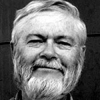
Gregory Benford
Gregory Benfordis an American science fiction author and astrophysicist who is on the faculty of the Department of Physics and Astronomy at the University of California, Irvine. He is also a contributing editor of Reason magazine...
NationalityAmerican
ProfessionNovelist
Date of Birth30 January 1941
CountryUnited States of America
fiction people science scientists tells time virtually visible
My feeling is that science is virtually an unexplored ground. It's very visible - more so all the time - but there's no fiction that tells us how scientists think, and they really don't think the way that other people do.
deal full great heavy lecturing professor time university
Because I've been a full professor doing research and lecturing at the University of California, I didn't have a lot of time to write, so I have always used my unconscious a great deal to do the really heavy lifting.
amount enormous forth helps learning matter plot spend subject time useful usual
It really helps if you know your subject matter immediately. I find that enormously useful because then you can concentrate on all the usual novelistic things - the character, the plot and so forth - and you don't have to spend an enormous amount of time learning another trade, essentially.
age art came swamped
This was the 1940s; there was no television. It was a different age - it was not swamped by media; it was swamped by reality, and storytelling was a very big art where I came from.
avoid bodily closed develop genuine harm nasa needed required science truly useful
Very little useful science got done in the space station. NASA never did the experiments needed to develop the technologies required for a genuine interplanetary expedition: centrifugal gravity to avoid bodily harm and a truly closed biosphere.
best casual challenged education enjoyed father high idyllic pervasive rural school southern teachers
Reared in rural southern Alabama, we enjoyed an idyllic Huck Finn boyhood. But education there was casual at best. Our mother and father were high school teachers and challenged the pervasive easy-going ignorance.
born came colossal condensed crunch harbor life primordial rocks spun
Our moon was born too small to harbor life. It came from the collision of a Mars-sized world into the primordial Earth. From that colossal crunch spun a disk of rocks that condensed into a satellite.
distant frame insight jarring lay promise supply truths
'Star Trek''s insight lay in the promise of going to the stars together, with well-defined stereotypes who could supply the emotional frame for the potentially jarring truths of these distant places.
carbon centuries exchange few hold land mass oceans
Like the ocean, land plants hold about three times as much carbon as the atmosphere. While oceans take many centuries to exchange this mass with the air, flora take only a few years.
both built people program readers science
The people who built the space program - both Soviet and U.S. - were readers of science fiction.
You don't actually have ideas; ideas have you.
godlike greater people universes
We have a name for people who create universes - they're called gods. There is no greater hubris than to think that we could take the place of godlike implications.
attraction both fans invented knows major net nobody proximity utterly
Virtuality - connection without proximity - is a major attraction in both fandom and the Net. Nobody knows you're a dog through the U.S. mail, either. Fans could be utterly different in their fanzine persona, which may be why both fandom and the Net were invented by individualistic Americans.
answer approach distant life likely messages searching seems work worth
Will searching for distant messages work? Is there intelligent life out there? The SETI effort is worth continuing, but our common-sense beacons approach seems more likely to answer those questions.