Gottfried Leibniz
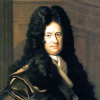
Gottfried Leibniz
Gottfried Wilhelm von Leibnizwas a German polymath and philosopher who occupies a prominent place in the history of mathematics and the history of philosophy, having developed differential and integral calculus independently of Isaac Newton. Leibniz's notation has been widely used ever since it was published. It was only in the 20th century that his Law of Continuity and Transcendental Law of Homogeneity found mathematical implementation. He became one of the most prolific inventors in the field of mechanical calculators. While...
NationalityGerman
ProfessionPhilosopher
Date of Birth1 July 1646
CityLeipzig, Germany
CountryGermany
I maintain also that substances, whether material or immaterial, cannot be conceived in their bare essence without any activity, activity being of the essence of substance in general.
Finally there are simple ideas of which no definition can be given; there are also axioms or postulates, or in a word primary principles, which cannot be proved and have no need of proof.
It can have its effect only through the intervention of God, inasmuch as in the ideas of God a monad rightly demands that God, in regulating the rest from the beginning of things, should have regard to itself.
It follows from what we have just said, that the natural changes of monads come from an internal principle, since an external cause would be unable to influence their inner being.
There are also two kinds of truths: truth of reasoning and truths of fact. Truths of reasoning are necessary and their opposite is impossible; those of fact are contingent and their opposite is possible.
The ultimate reason of things must lie in a necessary substance, in which the differentiation of the changes only exists eminently as in their source; and this is what we call God.
This is why the ultimate reason of things must lie in a necessary substance, in which the differentiation of the changes only exists eminently as in their source; and this is what we call God.
It is this way that in mathematics speculative theorems and practical canons are reduced by analysis to definitions, axioms and postulates.
To love is to place happiness in the heart of another....
The greatness of a life can only be estimated by the multitude of its actions. We should not count the years, it is our actions which constitute our life.
It is necessary to believe that the mixture of evil has produced the greatest possible good: otherwise the evil would not have been permitted.
If you have a clear idea of a soul, you will have a clear idea of a form; for it is of the same genus, though a different species.
In whatever manner God created the world, it would always have been regular and in a certain general order. God, however, has chosen the most perfect, that is to say, the one which is at the same time the simplest in hypothesis and the richest in phenomena.
The larger the mass of collected things, the less will be their usefulness. Therefore, one should not only strive to assemble new goods from everywhere, but one must endeavor to put in the right order those that one already possesses.