Gilbert Ryle
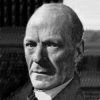
Gilbert Ryle
Gilbert Rylewas a British philosopher. He was a representative of the generation of British ordinary language philosophers who shared Wittgenstein's approach to philosophical problems, and is principally known for his critique of Cartesian dualism, for which he coined the phrase "the ghost in the machine." Some of his ideas in the philosophy of mind have been referred to as "behaviourist." Ryle's best known book is The Concept of Mind, in which he writes that the "general trend of this book...
ProfessionPhilosopher
Date of Birth19 August 1900
Gilbert Ryle quotes about
men needs machines
Man need not be degraded to a machine by being denied to be a ghost in a machine.
eye dark mind
To see is one thing; to picture or visualise is another. A person can see things, only when his eyes are open, and when his surroundings are illuminated; but he can have pictures in his mind's eye, when his eyes are shut and when the world is dark.
machines dogma ghost
The dogma of the Ghost in the machine.
mind machines movement
The dogma of the Ghost in the Machine ... maintains that there exist both bodies and minds; that there occur physical processes and mental processes; that there are mechanical causes of corporeal movements and mental causes of corporeal movements.
fairy-stories facts categories
A myth is, of course, not a fairy story. It is the presentation of facts belonging to one category in the idioms appropriate to another. To explode a myth is accordingly not to deny the facts but to re-allocate them.
self hunters hunted
In searching for the self, one cannot simultaneously be the hunter and the hunted.
believe mind doe
Contemporary philosophers have exercised themselves with the problem of our knowledge of other minds. Enmeshed in the dogma of the ghost in the machine, they have found it impossible to discover any logically satisfactory evidence warranting one person in believing that there exist minds other than his own. I can witness what your body does, but I cannot witness what your mind does, and my pretensions to infer from what your body does to what your mind does all collapse, since the premises for such inferences are either inadequate or unknowable.