George MacDonald
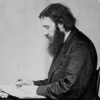
George MacDonald
George MacDonaldwas a Scottish author, poet, and Christian minister. He was a pioneering figure in the field of fantasy literature and the mentor of fellow writer Lewis Carroll. His writings have been cited as a major literary influence by many notable authors including W. H. Auden, C. S. Lewis, J. R. R. Tolkien, Walter de la Mare, E. Nesbit and Madeleine L'Engle. C. S. Lewis wrote that he regarded MacDonald as his "master": "Picking up a copy of Phantastes one...
NationalityScottish
ProfessionNovelist
Date of Birth10 December 1824
We profess to think Jesus the grandest and most glorious of men, yet hardly care to be like him. When we are offered his Spirit, that is, his very nature within us, for the asking, we will hardly take the trouble to ask for it.
Doubts are the messengers of the Living One to the honest. They are the first knock at our door of things that are not yet, but have to be, understood. . . . Doubts must precede every deeper assurance; for uncertainties are what we first see when we look into a region hitherto unknown, unexplored, unannexed.
Above all things, I delight in listening to stories, and sometimes in telling them.
Man finds it hard to get what he wants, because he does not want the best; God finds it hard to give, because He would give the best, and man will not take it.
There is this difference between the growth of some human beings and that of others: in the one case it is a continuous dying, in the other a continuous resurrection.
My prayers, my God, flow from what I am not; I think thy answers make me what I am.
No man has the mind of Christ, except him who makes it his business to obey him.
This is and has been the Father's work from the beginning-to bring us into the home of His heart.
To give truth to him who loves it not is but to give him more plentiful material for misinterpretation.
When we understand the outside of things, we think we have them. Yet the Lord puts his things in subdefined, suggestive shapes, yielding no satisfactory meaning to the mere intellect, but unfolding themselves to the conscience and heart.
It may be an infinitely less evil to murder a man than to refuse to forgive him. The former may be the act of a moment of passion: the latter is the heart’s choice.
I am perplexed at the stupidity of the ordinary religious being. In the most practical of all matters he will talk and speculate and try to feel, but he will not set himself to do.
If we do not die to ourselves, we cannot live to God, andhe that does not live to God, is dead.
I find that doing of the will of God leaves me no time for disputing about His plans.