Friedrich Nietzsche
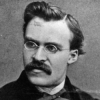
Friedrich Nietzsche
Friedrich Wilhelm Nietzschewas a German philosopher, cultural critic, poet and Latin and Greek scholar whose work has exerted a profound influence on Western philosophy and modern intellectual history. He began his career as a classical philologist before turning to philosophy. He became the youngest ever to hold the Chair of Classical Philology at the University of Basel in 1869, at the age of 24. Nietzsche resigned in 1879 due to health problems that plagued him most of his life, and...
NationalityGerman
ProfessionPhilosopher
Date of Birth15 October 1844
CityRocken, Germany
CountryGermany
Do not be deceived! The busiest people harbor the greatest weariness, their restlessness is weakness--they no longer have the capacity for waiting and idleness.
Envy and jealousy are the private parts of the human soul. Perhaps the comparison can be extended.
Men inadvertently comport themselves with nobility when they have grown accustomed to wanting nothing from others and always giving to them.
Yes, life is a woman!
Impoliteness is frequently the sign of an awkward modesty that loses its head when surprised and hopes to conceal this with rudeness.
One who is unassuming in dealing with people exhibits his arrogance all the more strongly in dealing with things (city, state, society, age, mankind). That is his revenge.
A real fox calls sour not only those grapes that he cannot reach but also those that he has reached and taken away from others.
This mother needs happy, reputable children, and that one needs unhappy ones: otherwise she cannot show her kindness as a mother.
Mothers easily become jealous of their sons' friends when they are particularly successful. As a rule a mother loves herself in her son more than she does the son himself.
The purpose of punishment is to improve those who do the punishing--that is the final recourse of those who support punishment.
There would be no sunshine in society if the born flatterers, I mean the so-called amiable people, did not bring it in with them.
People press toward the light not in order to see better but in order to shine better.--We are happy to regard the one before whomwe shine as light.
Whoever has looked deeply into the world might well guess what wisdom lies in the superficiality of men.
For some natures, changing their opinions is just as much a requirement of cleanliness as changing their clothes: for others, however, it is merely a requirement of vanity.