Frederick Douglass
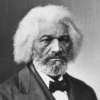
Frederick Douglass
Frederick Douglasswas an African-American social reformer, abolitionist, orator, writer, and statesman. After escaping from slavery in Maryland, he became a national leader of the abolitionist movement from Massachusetts and New York, gaining note for his dazzling oratory and incisive antislavery writings. In his time he was described by abolitionists as a living counter-example to slaveholders' arguments that slaves lacked the intellectual capacity to function as independent American citizens. Northerners at the time found it hard to believe that such a...
ProfessionAutobiographer
Date of Birth14 February 1818
CityTalbot County, MD
Viewed from the genuine abolition ground, Mr. Lincoln seemed tardy, cold, dull, and indifferent; but measuring him by the sentiment of his country, a sentiment he was bound as a statesman to consult, he was swift, zealous, radical, and determined.
To make a contented slave it is necessary to make a thoughtless one. It is necessary to darken the moral and mental vision and, as far as possible, to annihilate the power of reason.
Heaven's blessing must attend all, and freedom must soon be given to the pining millions under a ruthless bondage.
I knew that however bad the Republican party was, the Democratic party was much worse. The elements of which the Republican party was composed gave better ground for the ultimate hope of the success of the colored mans cause than those of the Democratic party.
The sunlight that has brought life and healing to you has brought stripes and death to me. This Fourth of July is yours, not mine.
I have one great political idea. . . . That idea is an old one. It is widely and generally assented to; nevertheless, it is very generally trampled upon and disregarded. The best expression of it, I have found in the Bible. It is in substance, "Righteousness exalteth a nation; sin is a reproach to any people" [Proverbs 14:34]. This constitutes my politics - the negative and positive of my politics, and the whole of my politics. . . . I feel it my duty to do all in my power to infuse this idea into the public mind, that it may speedily be recognized and practiced upon by our people.
If we would reach a degree of civilization higher and grander than any yet attained, we should welcome to our ample continent all nations, kindreds [sic] tongues and peoples; and as fast as they learn our language and comprehend the duties of citizenship, we should incorporate them into the American body politic. The outspread wings of the American eagle are broad enough to shelter all who are likely to come.
Neither we, nor any other people, will ever be respected till we respect ourselves and we will never respect ourselves till we have the means to live respectfully.
Now, take the Constitution according to its plain reading, and I defy the presentation of a single pro-slavery clause in it. On the other hand it will be found to contain principles and purposes, entirely hostile to the existence of slavery.
Abolish slavery tomorrow, and not a sentence or syllable of the Constitution need be altered. It was purposely so framed as to give no claim, no sanction to the claim, of property in man. If in its origin slavery had any relation to the government, it was only as the scaffolding to the magnificent structure, to be removed as soon as the building was completed.
... and in thinking of my life, I almost forgot my liberty.
The Federal Government was never, in its essence, anything but an anti-slavery government.
I ask you...to adopt the principles proclaimed by yourselves, by your revolutionary fathers, and by the old bell in Independence Hall....
They cannot degrade Frederick Douglass. The soul that is within me no man can degrade. I am not the one that is being degraded on account of this treatment, but those who are inflicting it upon me…