Ernst Mach
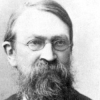
Ernst Mach
Ernst Waldfried Josef Wenzel Machwas an Austrian physicist and philosopher, noted for his contributions to physics such as study of shock waves. Quotient of one's speed to that of sound is named the Mach number in his honor. As a philosopher of science, he was a major influence on logical positivism, American pragmatism and through his criticism of Newton, a forerunner of Einstein's relativity...
NationalityAustrian
ProfessionScientist
Date of Birth18 February 1838
CountryAustria
The popular notion of an antithesis between appearance and reality has exercised a very powerful influence on scientific and philosophical thought.
It would not become physical science to see in its self created, changeable, economical tools, molecules and atoms, realities behind phenomena... The atom must remain a tool for representing phenomena.
Not bodies produce sensations, but element-complexes (sensation-complexes) constitute the bodies. When the physicist considers the bodies as the permanent reality, the `elements' as the transient appearance, he does not realise that all `bodies' are only mental symbols for element-complexes (sensation-complexes
In reality, the law always contains less than the fact itself, because it does not reproduce the fact as a whole but only in that aspect of it which is important for us, the rest being intentionally or from necessity omitted.
The philosophical point of view of the average man - if that term may be applied to his naive realism - has a claim to the highest consideration.
Thus the great gulf between physical and psychological research persists only when we acquiesce in our habitual stereotyped conceptions.
The theory of relativity is just as unacceptable to me as, say, the existence of the atom or other such dogmas.
In the long run we shall not be able to close our eyes to this simple truth, which is the immediate outcome of psychological analysis.
In fact, sensations of pleasure and pain, however faint they may be, really constitute an essential part of the content of all so-called emotions.
The very gradual character of the changes of the body also contributes to the stability of the ego, but in a much less degree than people imagine.
Strange as it may seem, the power of mathematics rests on its evasion of all unnecessary thought, and on its wonderful saving of mental operations.
I once knew an otherwise excellent teacher who compelled his students to perform all their demonstrations with incorrect figures, on the theory that it was the logical connection of the concepts, not the figure, that was essential.
Personally, people know themselves very poorly.
Ordinarily pleasure and pain are regarded as different from sensations.