Eric Kandel
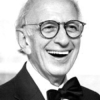
Eric Kandel
Eric Richard Kandelis an Austrian-American neuropsychiatrist. He was a recipient of the 2000 Nobel Prize in Physiology or Medicine for his research on the physiological basis of memory storage in neurons. He shared the prize with Arvid Carlsson and Paul Greengard...
NationalityAmerican
ProfessionScientist
Date of Birth7 November 1929
CountryUnited States of America
discussing emerged found gain lab looking moments notion showing students
I had many moments of disappointment, despondency, and exhaustion, but I always found that by reading the literature and showing up at my lab looking at the data as they emerged day by day and discussing them with my students and postdoctoral fellows, I would gain a notion of what to do next.
apart eleven empire fell following november war
I was born in Vienna on November 7, 1929, eleven years after the multiethnic Austro-Hungarian Empire fell apart following its defeat in World War I.
both brain brought feels fully grasp nature necessary neural rarely reveal reveals signs state
A brain scan may reveal the neural signs of anxiety, but a Kokoschka painting, or a Schiele self-portrait, reveals what an anxiety state really feels like. Both perspectives are necessary if we are to fully grasp the nature of the mind, yet they are rarely brought together.
biology concerned experience humanities mind natural sciences
The biology of mind bridges the sciences - concerned with the natural world - and the humanities - concerned with the meaning of human experience.
dominant early felt human mode people potential swept thinking
In the 1950s and early 1960s, psychoanalysis swept through the intellectual community, and it was the dominant mode of thinking about the mind. People felt that this was a completely new set of insights into human motivation, and that its therapeutic potential was significant.
biology conscious processing ultimate understand
One of the ultimate challenges for biology is to understand the brain's processing of unconscious and conscious perception, emotion, and empathy.
began complex focused form implicit marine rather snail studying
Rather than studying the most complex form of memory in a very complicated animal, we had to take the most simple form - an implicit form of memory - in a very simple animal. So I began to look around for very simple animals. And I focused in on the marine snail Aplysia.
ages aristotle bergman human nature oneself plato serious since socrates thinkers understand
Since Socrates and Plato first speculated on the nature of the human mind, serious thinkers through the ages - from Aristotle to Descartes, from Aeschylus to Strindberg and Ingmar Bergman - have thought it wise to understand oneself and one's behavior.
biological complex constructs controls experience immense organ sensory
The brain is a complex biological organ possessing immense computational capability: it constructs our sensory experience, regulates our thoughts and emotions, and controls our actions.
artistic cultural dialect genuinely hold later learned loved
My parents genuinely loved Vienna, and in later years I learned from them why the city exerted a powerful hold on them and other Jews. My parents loved the dialect of Vienna, its cultural sophistication, and artistic values.
cognitive component except
You learn emotional experiences as much as you learn cognitive experiences, except that they are more unconscious. Sometimes one represses the cognitive component of it, but it's often more difficult to repress the emotional component.
fascinated love recall
Memory has always fascinated me. Think of it. You can recall at will your first day in high school, your first date, your first love.
bad electrical fear learned learns neutral opposite order pair produce shock stimulus tone
In order to produce learned fear, you take a neutral stimulus like a tone, and you pair it with an electrical shock. Tone, shock. Tone, shock. So the animal learns that the tone is bad news. But you can also do the opposite - shock it at other times, but never when the tone comes on.
changes enduring growth involves memory result
Long-term memory involves enduring changes that result from the growth of new synaptic connections.