Edward Hirsch
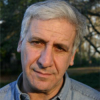
Edward Hirsch
Edward Hirschis an American poet and critic who wrote a national bestseller about reading poetry. He has published nine books of poems, including The Living Fire: New and Selected Poems, which brings together thirty-five years of work, and Gabriel: A Poem, a book-length elegy for his son that The New Yorker calls “a masterpiece of sorrow.” He has also published five prose books about poetry. He is president of the John Simon Guggenheim Memorial Foundation in New York City...
NationalityAmerican
ProfessionPoet
Date of Birth20 January 1950
CountryUnited States of America
James Salter is a consummate storyteller. His manners are precise and elegant; he has a splendid New York accent; he runs his hands through his gray hair and laughs boyishly.
I find great consolation in having a lot of poetry books around. I believe that writing poetry and reading it are deeply intertwined. I've always delighted in the company of the poets I've read.
There are still many tribal cultures where poetry and song, there is just one word for them. There are other cultures with literacy where poetry and song are distinguished. But poetry always remembers that it has its origins in music.
When I taught at the University of Houston in the Creative Writing program, we required the poets to take workshops in fiction writing, and we required the fiction writers to take workshops in poetry.
Throughout his work, Philip Levine's most powerful commitment has been to the failed and lost, the marginal, the unloved, the unwanted.
A hook shot kisses the rim and hangs there, helplessly, but doesn't drop and for once our gangly starting center boxes out his man and times his jump perfectly, gathering the orange leather/from the air like a cherished possession.
One of the deep fundamentals of poetry is the recurrence of sounds, syllables, words, phrases, lines, and stanzas. Repetition can be one of the most intoxicating features of poetry. It creates expectations, which can be fulfilled or frustrated. It can create a sense of boredom and complacency, but it can also incite enchantment and inspire bliss.
I would say there are different kinds of poems. There are things that poets in the history of poetry hit upon when they're very young that can never be outdone and it's a remarkable, strange experience when you think of say Arthur Rimbaud who write poetry between the ages of 17 and 21 whose career was over by the time he was 22.
I am a tiny seashell that has secretly drifted ashore and carries the sound of the ocean surging through its body.
I have tried to remember throughout that poetry is made by flesh-and-blood human beings. It is a bloody art. It lives on a human scale and thrives when it is passed from hand to hand.
I did not know the work of mourning Is a labor in the dark We carry inside ourselves
Read poems to yourself in the middle of the night. Turn on a single lamp and read them while you're alone in an otherwise dark room or while someone else sleeps next to you. Read them when you're wide awake in the early morning, fully alert. Say them over to yourself in a place where silence reigns and the din of the culture — the constant buzzing noise that surrounds us — has momentarily stopped. These poems have come from a great distance to find you.
And every year there is a brief, startling moment When we pause in the middle of a long walk home and Suddenly feel something invisible and weightless Touching our shoulders, sweeping down from the air: It is the autumn wind pressing against our bodies; It is the changing light of fall falling on us.
Works of art imitate and provoke other works of art, the process is the source of art itself.