Edward Hirsch
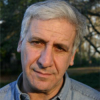
Edward Hirsch
Edward Hirschis an American poet and critic who wrote a national bestseller about reading poetry. He has published nine books of poems, including The Living Fire: New and Selected Poems, which brings together thirty-five years of work, and Gabriel: A Poem, a book-length elegy for his son that The New Yorker calls “a masterpiece of sorrow.” He has also published five prose books about poetry. He is president of the John Simon Guggenheim Memorial Foundation in New York City...
NationalityAmerican
ProfessionPoet
Date of Birth20 January 1950
CountryUnited States of America
I think one of the things that distinguished my work from the beginning when I was in college was my turning towards poetry from other countries.
Now, I do say, "It's possible. You might be the first. I'm not saying it's impossible, but the odds are very much against you." All great poets have been great readers and the way to learn your craft in poetry is by reading other poetry and by letting it guide you.
There's been no poet, no great poet in the history of poetry who hasn't also been a great reader of poetry. This is sometimes distressing to my students when I tell them this.
I guess that would have been 1968. I was a freshman in college and I wasn't writing good poems, but I was at least trying to write poems then.
In a way, that's also a recognition that Dante needs Virgil and that the Inferno needs the Aeneid and that the epic needs a model and that for Dante to write this great poem he needs someone to come before him and he turns to Virgil's text, especially book six where Aeneas goes down into the underworld. And for me, that's a model of the poet's relationship to previous poetry, to another poetry as calling out for guidance.
I started then to try and shape something rather than just express it and when I started to shape something and to imitate other poems that were written by other people, when I had tried to integrate my reading and my writing I was on my path.
There are many poets that use as my models. In my first book of poems, I had several for the "Sleepwalkers," I had several poems that were apprentice poems like this in which I take a walk with a poet who is no longer alive.
I walk with Federico Garcia Lorca around the Upper West Side in Manhattan because that was a neighborhood he lived in and I imagine walking around Paris with Cesar Vallejo, a great Peruvian poet who lived in Paris. And I kind of create the walk as a kind of drama of my apprenticeship.
When I was a freshman in college I went to Grinnell College in Iowa. I brought my poems to my freshman humanities teacher whose name was Carol Parsinan, a wonderful teacher. And Carol did a really great thing for me. She taught me more than anyone.
But, that was the beginning, though I didn't start writing until I was in high school and when I was in high school I really began to write poetry with great energy and enthusiasm.
Then I found another one, grandpa's poem. It turned out it had been written by Emily Brontë and it wasn't my grandfather's poem at all, although my response to it, I think, was pretty much the same, I just had the author wrong.
I didn't ever consider poetry the province exclusively of English and American literature and I discovered a great amount in reading Polish poetry and other Eastern European poetry and reading Russian poetry and reading Latin American and Spanish poetry and I've always found models in those other poetries of poets who could help me on my path.
I didn't sit down then and start writing poems, but it was in the back of my mind.
After my grandfather died I went down to the basement of my family house where my family kept books, anthologies and things and there was an anthology without any names attached to it and I read a poem called Spellbound and I somehow attached it to my grandfather's death and I thought my grandfather had written it.