David Hume
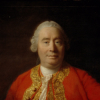
David Hume
David Hume– 25 August 1776) or David Homewas a Scottish philosopher, historian, economist, and essayist, who is best known today for his highly influential system of radical philosophical empiricism, skepticism, and naturalism...
NationalityScottish
ProfessionPhilosopher
Date of Birth7 May 1711
affairs appears consider ease few governed human surprising
Nothing appears more surprising to those who consider human affairs with a philosophical eye, than the ease with which the many are governed by the few
human-nature born unfortunate
Never literary attempt was more unfortunate than my Treatise of Human Nature. It fell dead-born from the press.
ideas emotion human-nature
There is a very remarkable inclination in human nature to bestow on external objects the same emotions which it observes in itself, and to find every where those ideas which are most present to it.
history principles human-nature
History is the discovering of the principles of human nature.
taste truth-is humans
Truth is disputable, not human taste.
philosophical men human-nature
Human Nature is the only science of man; and yet has been hitherto the most neglected.
ends attainment humans
The great end of all human industry is the attainment of happiness
human-life guides humans
Custom is the great guide to human life.
arises bestow creature eminent human interests merit promote seems sentiment tendency
Upon the whole, then it seems undeniable, that nothing can bestow more merit on any human creature than the sentiment of benevolence in an eminent degree; and that a part at least of its merit arises from its tendency to promote the interests of our
custom great guide human
Custom, then, is the great guide of human life.
excellent happy suit temper whose
He is happy whose circumstances suit his temper but he is more excellent who can suit his temper to any circumstances.
character government law
How could politics be a science, if laws and forms of government had not a uniform influence upon society? Where would be the foundation of morals, if particular characters had no certain or determinate power to produce particular sentiments, and if these sentiments had no constant operation on actions?
beauty reflection mind
If the contemplation, even of inanimate beauty, is so delightful; if it ravishes the senses, even when the fair form is foreign tous: What must be the effects of moral beauty? And what influence must it have, when it embellishes our own mind, and is the result of our own reflection and industry?
doubt religion mystery
The whole [of religion] is a riddle, an ænigma, an inexplicable mystery. Doubt, uncertainty, suspence of judgment appear the onlyresult of our most accurate scrutiny, concerning this subject.