David Gergen
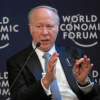
David Gergen
David Richmond Gergenis an American political commentator and former presidential advisor who served during the administrations of Richard Nixon, Gerald Ford, Ronald Reagan, and Bill Clinton. He is currently a Senior Political Analyst for CNN and a Professor of Public Service and Co-Director of the Center for Public Leadership at the Harvard Kennedy School. Gergen is also the former Editor-at-Large of U.S. News and World Report and a contributor to CNN.com and Parade Magazine. He has twice been a member...
NationalityAmerican
ProfessionTV Show Host
Date of Birth9 May 1942
CountryUnited States of America
Leadership is about calling people to do things beyond themselves.
It's very, very hard to speak truth to power when the truth is unpleasant. I think it's one of the toughest things especially a young person has to do and the only way you can do it is if you're willing to walk out the door if he doesn't take your advice. Or if you're willing to walk out the door if he goes over the line.
At the heart of leadership is the leader's relationship with followers. People will entrust their hopes and dreams to another person only if they think the other is a reliable vessel.
Politics is like watching football. Yes, you can see it directly on your screen, but I think a lot of people want to have some understanding of what's happening, why the play is unfolding the way it is, and I think that's where it can help them, not to render judgments but to help people make their own judgments in a more informed way.
The proudest moment for [a teacher of leaders] is seeing not what students learn but what they do.
Leadership is a journey. Each one of us has to take our own path, and get there our own way.
A leader's role is to raise people's aspirations for what they can become and to release their energies so they will try to get there.
We know that second terms have historically been marred by hubris and by scandal.
On 9/11, we were attacked by an enemy?. But there's no foreign enemy here. There's nobody to blame.
When he hung up on Nancy Reagan, that's when he crossed his final threshold.
We've seen the hubris. And now we're seeing the scandals.
Yes, it absolutely suggests that. It sounds to me... as if they had a negotiation between the agency and the NSC over what they were going to say, that the CIA objected strenuously to the idea of asserting it on the basis of U.S. intelligence, and when the NSC came back and said, let's blame it on them, let's attribute it to the British, the CIA, well, on that basis, on part of our negotiation, we withdraw our formal objection. And Condi Rice is saying, he didn't object, therefore, we didn't take it out.
I think he still has time to recover politically, and I think it's likely he will. He's good at this. You'll see a better Bush during the next few days, in charge and compassionate. But if he doesn't, there's going to be a serious political price to pay.
I think he has to calibrate it very carefully. The White House says it is going to be a very optimistic speech. But I think people are not feeling very optimistic at the moment.