Dan Shechtman
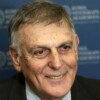
Dan Shechtman
Dan Shechtman is the Philip Tobias Professor of Materials Science at the Technion – Israel Institute of Technology, an Associate of the US Department of Energy's Ames Laboratory, and Professor of Materials Science at Iowa State University. On April 8, 1982, while on sabbatical at the U.S. National Bureau of Standards in Washington, D.C., Shechtman discovered the icosahedral phase, which opened the new field of quasiperiodic crystals. Shechtman was awarded the 2011 Nobel Prize in Chemistry for the discovery of...
NationalityIsraeli
ProfessionScientist
Date of Birth24 January 1941
CountryIsrael
Wherever I go in the world, I'm treated like royalty.
The Technion didn't teach students how to open a start-up.
A president should look for what binds the people together rather than what drives them apart. As soon as you are identified with one side of the political map, you are no longer everybody's president.
I hope that I have had some effect on the fact that Israel is a start-up nation.
I'm proud of my family, very proud - I have ten grandchildren, four children, and one wife.
In most cases, the news is not really news. But in some cases, discoveries are made and should be listened to.
On April 8, 1982, I was alone in the electron microscope room when I discovered the Icosahedral Phase that opened the field of quasi-periodic crystals.
The message from the Technion when I was a student was: 'You will be so good that when you graduate, everyone will want to hire you.'
In the forefront of science, there is not much difference between religion and science. People harbor beliefs. That's what happens when people believe something religiously.
I know there is a stereotype that I am naive, but I know what I want, and I know what I'm doing to get there.
I told everyone who was ready to listen that I had material with pentagonal symmetry. People just laughed at me.
As far as innovation goes, I can tell you that Korean students are reluctant to step out of line. If I ask questions, nobody raises their hands - not because they don't know the answers, but because they don't want to step out of line.
Crystallographers believed in X-ray results, which are of course very accurate. But the x-rays are limited, and electron microscopy filled the gap, and so the discovery of quasicrystals could have been discovered only by electron microscopy, and the community of crystallographers, for several years, was not willing to listen.
I told myself, 'I am teaching entrepreneurship, so I should be an entrepreneur myself.'