Chuck Close
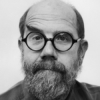
Chuck Close
Charles Thomas "Chuck" Closeis an American painter/artist and photographer who achieved fame as a photorealist, through his massive-scale portraits. Close often paints abstract portraits, that are shown in the world's finest galleries. Although a catastrophic spinal artery collapse in 1988 left him severely paralyzed, he has continued to paint and produce work that remains sought after by museums and collectors. Close lives and works in Bridgehampton, New York and Long Beach, NY and New York City's East Village. His first...
NationalityAmerican
ProfessionPhotographer
Date of Birth5 July 1940
CityMonroe, WA
CountryUnited States of America
I knew from the age of five what I wanted to do. The one thing I could do was draw. I couldn't draw that much better than some of the other kids, but I cared more and I wanted it badly.
I can't always reach the image in my mind... almost never, in fact... so that the abstract image I create is not quite there, but it gets to the point where I can leave it.
The first thing I do is take Polaroids of the sitter - 10 or 12 color Polaroids and eight or 10 black-and whites.
It's like a magic well. You think you know everything about [a] photograph, you think you've gotten everything out of it, and all of a sudden I see things in it I'd never seen before.
Far more interesting than problem solving is problem creation.
Of all the artists who emerged in the '80s, I think perhaps Cindy Sherman is the most important.
In the 7th grade, I made a 20-foot long mural of the Lewis and Clark Trail while we were studying that in history because I knew I wasn't going to be able to spit back the names and the dates and all that stuff on a test.
Most people are good at too many things. And when you say someone is focused, more often than not what you actually mean is they're very narrow.
A photograph doesn't gain weight or lose weight, or change from being happy to being sad. It's frozen. You can use it, then recycle it.
What difference does it make whether you're looking at a photograph or looking at a still life in front of you? You still have to look.
Losing my father at a tender age was extremely important in being able to accept what happened to me later when I became a quadriplegic.
I think I was driven to paint portraits to commit images of friends and family to memory. I have face blindness, and once a face is flattened out, I can remember it better.
From my point of view, photography never got any better than it was in 1840.
In my art, I deconstruct and then I reconstruct, so visual perception is one of my primary interests.