Chen Ning Yang
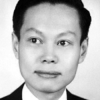
Chen Ning Yang
Chen-Ning Franklin Yang, also known as Yang Zhenning, is a Chinese-born American physicist who works on statistical mechanics and particle physics. He and Tsung-dao Lee received the 1957 Nobel Prize in Physics for their work on parity nonconservation of weak interaction. The two proved theoretically that one of the basic quantum-mechanics laws, the conservation of parity, is violated in the so-called weak nuclear reactions, those nuclear processes that result in the emission of beta or alpha particles...
NationalityAmerican
ProfessionPhysicist
Date of Birth22 September 1922
CountryUnited States of America
Qinghua was first established as a preparatory school in 1911. In 1928, it became a university. In 1929, my father joined Qinghua as a professor, so that was also the year that I moved to that campus because my father brought the whole family along.
I think in the sciences there is still the general belief that America is still tops. For America to lose that, I think, would be very bad, not just speaking as a scientist myself. I think it would be very bad for the morale of the whole country.
I think America is a new country. It is a young culture. The spirit of the opening of the West is still with the Americans. It's a very practical and individual-based kind of philosophy that had worked in America for a long time, had been very successful. And the spirit is very much there.
The application of group theory to physics became one of the main branches of physics that I specialized in.
Science has become something that everybody knows he has to pay attention to, but not everybody is a believer. So I don't think we should equate science with religion. But, that science is progressively playing a more and more important part in the life of every individual is obvious.
The strongest interactions are the nuclear interactions, which include the forces that bind nuclei together and the interaction between the nuclei and the z mesons. It also includes the interactions that give rise to the observed strange-particle production.
A graduate student who is still learning courses is not really taking a maximum advantage of a research university's offerings. He should already be finished with course-taking, as he would then be able to shape his own taste about what is a good subject for research work in the graduate school.