Charles Scott Sherrington
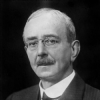
Charles Scott Sherrington
Sir Charles Scott Sherrington OM GBE PRSwas an English neurophysiologist, histologist, bacteriologist, and a pathologist, Nobel laureate and president of the Royal Society in the early 1920s. He received the Nobel Prize in Physiology or Medicine with Edgar Adrian, 1st Baron Adrian, in 1932 for their work on the functions of neurons. Prior to the work of Sherrington and Adrian, it was widely accepted that reflexes occurred as isolated activity within a reflex arc. Sherrington received the prize for showing...
NationalityBritish
ProfessionScientist
Date of Birth27 November 1857
The brain is a mystery; it has been and still will be. How does the brain produce thoughts? That is the central question and we have still no answer to it.
Natural knowledge has not forgone emotion. It has simply taken for itself new ground of emotion, under impulsion from and in sacrifice to that one of its 'values', Truth.
Each waking day is a stage dominated for good or ill, comedy, farce, or tragedy, by a dramatis personae, the 'self', and so it will be until the curtain drops.
In some units it may suppress the motor discharge altogether, in some it may merely slow the motor discharge thus lessening the wave frequency of the contraction and so the tension.
In other words the inhibitory process was found capable of no less delicate quantitative adjustment than is the excitatory process.