Charles Koch
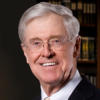
Charles Koch
Charles de Ganahl Kochis an American businessman, political donor and philanthropist. He is co-owner, chairman of the board, and chief executive officer of Koch Industries, while his brother David H. Koch serves as Executive Vice President. Charles and David each own 42% of the conglomerate. The brothers inherited the business from their father, Fred C. Koch, then expanded the business. Originally involved exclusively in oil refining and chemicals, Koch Industries now includes process and pollution control equipment and technologies; polymers...
NationalityAmerican
ProfessionBusiness Executive
Date of Birth1 November 1935
CityWichita, KS
CountryUnited States of America
Joe's tremendous leadership throughout his six years as president and chief operating officer gives us confidence he will deliver more of the same at Georgia-Pacific. In Bill's 32 years with Koch, he has done an exemplary job of building our operations excellence capability. I am certain Joe and Bill, along with the outstanding Georgia-Pacific team, will continue Georgia-Pacific's proud tradition.
Joe's tremendous leadership throughout his six years as Koch Industries' president and chief operating officer gives us confidence he will deliver more of the same at Georgia-Pacific. Bill, during his 32 years with Koch, has done an exemplary job of building our operations excellence capability. I am certain Joe and Bill, along with the outstanding Georgia-Pacific team, will continue Georgia-Pacific's proud tradition.
Our vision controls the way we think and, therefore, the way we act the vision we have of our jobs determines what we do and the opportunities we see or don't see.
So to the best we can, what we do is focus on creating value for others, and how do we do that? We do it by trying to produce products and services that our customers will value more than their alternatives, and not just their alternatives today, but what the alternatives will be in the future. We try to more efficiently use resources than our competitors, and constantly improve in that, and we try to do the best job we can in creating a safe environment, and environmental excellence, and constantly improve at that.
I learned that unless you start working, if you're frozen out of work, you will never learn the habits, the discipline, the values of cooperation and improvement unless you get a job, and that's what statistic show. It's, unless you get a job and keep it, you will not get out of poverty. If you do, you have a very good chance of working out of poverty.
Best part of my job is fulfillment. When I see that, that we're creating value, that we're helping improve people's lives, and we benefit from it, so it's a system of mutual benefit. Our philosophy's working. That's what turns me on. That's what keeps me going.
In business, real jobs profitably produce goods and services that people value more highly than their alternatives. Subsidizing inefficient jobs is costly, wastes resources, and weakens our economy.
Business managers don't want to come here because you have a former business manager on the board,
Our hearts and prayers go out to all of these people as they begin the hard work of rebuilding their lives.
Koch companies employ 60,000 Americans, who make many thousands of products that Americans want and need.
No centralized government, no matter how big, how smart or how powerful, can effectively and efficiently control much of society in a beneficial way. On the contrary, big governments are inherently inefficient and harmful.
We have the best leaders and the most depth of leadership we've ever had. If I get hit by a truck, maybe it would get me out of the way and it would go better.
Citizens who over-rely on their government to do everything not only become dependent on their government, they end up having to do whatever the government demands. In the meantime, their initiative and self-respect are destroyed.
In general, an asset should be sold when it has greater value to a buyer. This happens when a buyer has a complimentary business or capability that would enable them to do more with that business. Many businesses we have exited were not failures, but had simply reached a point in their life cycle where they no longer provided a core capability or served as a platform for growth.