Cesare Beccaria
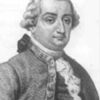
Cesare Beccaria
Cesare Bonesana-Beccaria, Marquis of Gualdrasco and Villareggiowas an Italian criminologist, jurist, philosopher, and politician, who is widely considered as the most talented jurist and one of the greatest thinkers of the Age of Enlightenment. Recognized to be one of the fathers of classical criminal theory and modern penology, he is well remembered for his treatise On Crimes and Punishments, which condemned torture and the death penalty, and was a founding work in the field of penology and the Classical School...
NationalityItalian
ProfessionJudge
Date of Birth15 March 1738
CountryItaly
To the extent that human spirits are made gentle by the social state, sensibility increases; as it increases, the severity of punishment must diminish if one wishes to maintain a constant relation between object and feeling.
Easy, simple and great laws, which await nothing but a sign from the lawgiver to spread prosperity and vigour throughout the nation, laws which would earn him immortal hymns of gratitude down the generations, are those which are least considered or least wanted.
To show men that crimes can be pardoned, and that punishment is not their inevitable consequence, encourages the illusion of impunity and induces the belief that, since there are pardons, those sentences which are not pardoned are violent acts of force rather than the products of justice.
Men's most superficial feelings lead them to prefer cruel laws. Nevertheless, when they are subjected to them themselves, it is in each man's interest that they be moderate, because the fear of being injured is greater than the desire to injure.
If the same punishment is prescribed for two crimes that injure society in different degrees, then men will face no stronger deterrent from committing the greater crime if they find it in their advantage to do so.
Nothing could be more dangerous than following the popular maxim whereby it is the spirit of the law that must be consulted. This is an embankment that, once broken, gives way to a torrent of opinions.
Our knowledge and all of our ideas are mutually connected; the more complicated they are, the more numerous must be the roads that lead to them and depart from them.
It is impossible to anticipate all of the misdeeds engendered by the universal conflict of human passions. They multiply at a compound rate with the growth in population and the interlacing of particular interests that cannot be directed with geometrical precision towards the public utility.
Laws are the terms by which independent and isolated men united to form a society, once they tired of living in a perpetual state of war where the enjoyment of liberty was rendered useless by the uncertainty of its preservation. They sacrificed a portion of this liberty so that they could enjoy the remainder in security and peace.
If we open our history books, we shall see that the laws, for all that they are or should be contracts amongst free men, have rarely been anything but the tools of the passions of a few men or the offspring of a fleeting and haphazard necessity.
If someone were to say that life at hard labor is as painful as death and therefore equally cruel, I should reply that, taking all the unhappy moments of perpetual slavery together, it is perhaps even more painful, but these moments are spread out over a lifetime, and capital punishment exercises all its power in an instant.
Happy are those few nations that have not waited till the slow succession of human vicissitudes should, from the extremity of evil, produce a transition to good; but by prudent laws have facilitated the progress from one to the other!
Unless some other factor is operative, in large, weak and underpopulated states, the luxury of ostentation prevails over that of comfort; but in countries which are more populous than extensive, the luxury of comfort always diminishes ostentation.
For every crime that comes before him, a judge is required to complete a perfect syllogism in which the major premise must be the general law; the minor, the action that conforms or does not conform to the law; and the conclusion, acquittal or punishment. If the judge were constrained, or if he desired to frame even a single additional syllogism, the door would thereby be opened to uncertainty.