Carl Jung
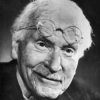
Carl Jung
Carl Gustav Jungwas a Swiss psychiatrist and psychotherapist who founded analytical psychology. His work has been influential not only in psychiatry but also in philosophy, anthropology, archaeology, literature, and religious studies. He was a prolific writer, though many of his works were not published until after his death...
NationalitySwiss
ProfessionScientist
Date of Birth26 July 1875
CityKesswil, Switzerland
CountrySwitzerland
Instinct is like Nature herself - prodigiously conservative, and yet transcending her own historical conditions in her acts of creation.
The angel personifies something new arising from the deep unconscious.
The unconscious process moves spiral-wise around a center, gradually getting closer, while the characteristics of the center grow more and more distinct.
Dream analysis stands or falls with [the hypothesis of the unconscious]. Without it the dream appears to be merely a freak of nature, a meaningless conglomerate of memory-fragments left over from the happenings of the day.
Words are animals, alive with a will of their own
That which we do not confront in ourselves we will meet as fate.
Neurosis is the suffering of a soul which has not discovered its meaning.
There is rarely a creative man who does not have to pay a high price for the divine spark of his great gifts . . . the human element is frequently bled for the benefit of the creative element.
The underlying, primary psychic reality is so inconceivably complex that it can be grasped only at the farthest reach of intuition, and then but very dimly. That is why it needs symbols.
An old man who cannot bid farewell to life appears as feeble and sickly as the young man who is unable to embrace it.
But the meaning of life is not . . . explained by one's business life, nor is the deep desire of the human heart answered by a bank account.
Ultimate truth, if there be such a thing, demands the concert of many voices.
Our unconscious is the key to our life's pursuits.
The shadow is a moral problem that challenges the whole ego-personality, for no one can become conscious of the shadow without considerable moral effort.