Carl Jung
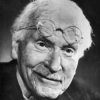
Carl Jung
Carl Gustav Jungwas a Swiss psychiatrist and psychotherapist who founded analytical psychology. His work has been influential not only in psychiatry but also in philosophy, anthropology, archaeology, literature, and religious studies. He was a prolific writer, though many of his works were not published until after his death...
NationalitySwiss
ProfessionScientist
Date of Birth26 July 1875
CityKesswil, Switzerland
CountrySwitzerland
Criticism can be effective when there is something that must be destroyed or dissolved, but it is capable only of harm when there is something to be built.
The serious problems in life...are never fully solved. If ever they should appear to be so it is a sure sign that something has been lost. The meaning and purpose of a problem seem to lie not in its solution but in our working at it incessantly.
Deeply listening to music opens up new avenues of research I'd never even dreamed of. I feel from now on music should be an essential part of every analysis.
Man can try to name love, showering upon it all the names at his command, and still he will involve himself in endless self deceptions. If he possesses a grain of wisdom he will lay down his arms and name the unknown by the more unknown - ignotum per ignotius - that is by the name of God.
Somewhere, right at the bottom of one’s own being, one generally does know where one should go and what one should do. But there are times when the clown we call “I” behaves in such a distracting fashion that the inner voice cannot make its presence felt.
The spirit is the life of the body seen from within, and the body the outward manifestation of the life of the spirit-the two being really one.
Our mania for rational explanations obviously has its roots in our fear of metaphysics, for the two were always hostile brothers. Hence, anything unexpected that approaches us from the dark realm is regarded either as coming from outside and, therefore, as real, or else as a hallucination and, therefore, not true. The idea that anything could be real or true which does not come from outside has hardly begun to dawn on contemporary man.
It is in applied psychology, if anywhere, that today we should be modest and grant validity to a number of apparently contradictory opinions; for we are still far from having anything like a thorough knowledge of the human psyche, that most challenging field of scientific enquiry. For the present we have merely more or less plausible opinions that defy reconciliation.
Plants were bound for good or ill to their places. They expressed not only beauty but also the thoughts of God's world, with an intent of their own and without deviation. Trees in particular were mysterious and seemed to me direct embodiments of the incomprehensible meaning of life. For that reason, the woods were the places where I felt closest to its deepest meaning and to its awe-inspiring workings.
His retreat into himself is not a final renunciation of the world, but a search for quietude, where alone it is possible for him to make his contribution to the life of the community.
No one should deny the danger of the descent, but it can be risked. No one need risk it, but it is certain that someone will. And let those who go down the sunset way do so with open eyes, for it is a sacrifice which daunts even the gods. Yet every descent is followed by an ascent.
Our psyche is set up in accord with the structure of the universe, and what happens in the macrocosm likewise happens in the infinitesimal and most subjective reaches of the psyche
The world hangs on a thin thread, and that is the psyche of man.
It is really the mistake of our age. We think it is enough to discover new things, but we don't realize that knowing more demands a corresponding development of morality.