Blaise Pascal
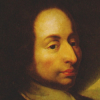
Blaise Pascal
Blaise Pascalwas a French mathematician, physicist, inventor, writer and Christian philosopher. He was a child prodigy who was educated by his father, a tax collector in Rouen. Pascal's earliest work was in the natural and applied sciences where he made important contributions to the study of fluids, and clarified the concepts of pressure and vacuum by generalising the work of Evangelista Torricelli. Pascal also wrote in defence of the scientific method...
NationalityFrench
ProfessionPhilosopher
Date of Birth19 June 1623
CityClermont-Ferrand, France
CountryFrance
In proportion as our own mind is enlarged we discover a greater number of men of originality. Commonplace people see no difference between one man and another.
No soul of high estate can take pleasure in slander. It betrays a weakness.
What reason have atheists for saying that we cannot rise again? That what has never been, should be, or that what has been, should be again? Is it more difficult to come into being than to return to it.
Love has no age as it is always renewing itself.
Imagination is the deceptive part in man, the mistress of error and falsehood.
What a strange vanity painting is; it attracts admiration by resembling the original, we do not admire.
We like to be deceived.
The Christian's God does not consist merely of a God who is the author of mathematical truths and the order of elements... But a God of love and consolation.
I have spent much time in the study of the abstract sciences; but the paucity of persons with whom you can communicate on such subjects disgusted me with them. When I began to study man, I saw that these abstract sciences are not suited to him, and that in diving into them, I wandered farther from my real object than those who knew them not, and I forgave them for not having attended to these things. I expected then, however, that I should find some companions in the study of man, since it was so specifically a duty. I was in error. There are fewer students of man than of geometry.
The war existing between the senses and reason.
The origins of disputes between philosophers is, that one class of them have undertaken to raise man by displaying his greatness, and the other to debase him by showing his miseries.
We know the truth not only through our reason but also through our heart. It is through the latter that we know first principles, and reason, which has nothing to do with it, tries in vain to refute them.
The past and present are only our means; the future is always our end. Thus we never really live, but only hope to live.
We must kill them in war, just because they live beyond the river. If they lived on this side, we would be called murderers.