Bertrand Russell
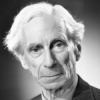
Bertrand Russell
Bertrand Arthur William Russell, 3rd Earl Russell, OM, FRSwas a British philosopher, logician, mathematician, historian, writer, social critic, political activist and Nobel laureate. At various points in his life he considered himself a liberal, a socialist, and a pacifist, but he also admitted that he had "never been any of these things, in any profound sense". He was born in Monmouthshire into one of the most prominent aristocratic families in the United Kingdom...
NationalityBritish
ProfessionPhilosopher
Date of Birth18 May 1872
An extra-terrestrial philosopher, who had watched a single youth up to the age of twenty-one and had never come across any other human being, might conclude that it is the nature of human beings to grow continually taller and wiser in an indefinite progress towards perfection; and this generalization would be just as well founded as the generalization which evolutionists base upon the previous history of this planet.
In a logically perfect language, there will be one word and no more for every simple object, and everything that is not simple will be expressed by a combination of words, by a combination derived, of course, from the words for the simple things that enter in, one word for each simple component.
Mathematics, rightly viewed, possesses not only truth, but supreme beauty-a beauty cold and austere ... yet sublimely pure and capable of stern perfection such as only the greatest art can show.
Each act of cruelty is eternally a part of the universe; nothing that happens later can make that act good rather than bad, or can confer perfection on the whole of which it is a part.
Cruelty is in theory a perfectly adequate ground for divorce, but it may be interpreted so as to become absurd
To save the world requires faith and courage: faith in reason, and courage to proclaim what reason shows to be true
Many people would sooner die than think; in fact, they do so.
The man who can centre his thoughts and hopes upon something transcending self can find a certain peace in the ordinary troubles of life, which is impossible to the pure egoist.
Those who have never known the deep intimacy and the intense companionship of mutual love have missed the best thing that life has to give.
What is wanted is not the will to believe, but the wish to find out, which is its exact opposite.
Boredom is a vital problem for the moralist, since at least half the sins of mankind are caused by the fear of it.
We have in fact, two kinds of morality, side by side: one that we preach, but do not practice, and another that we practice, but seldom preach.
With equal passion I have sought knowledge. I have wished to understand the hearts of men. I have wished to know why the stars shine. And I have tried to apprehend the Pythagorean power by which number holds sway about the flux. A little of this, but not much, I have achieved.
The social psychologist of the future will have a number of classes of school children on whom they will try different methods of producing an unshakable conviction that snow is black. When the technique has been perfected, every government that has been in charge of education for more than one generation will be able to control its subjects securely without the need of armies or policemen.