Bertrand Russell
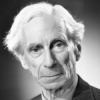
Bertrand Russell
Bertrand Arthur William Russell, 3rd Earl Russell, OM, FRSwas a British philosopher, logician, mathematician, historian, writer, social critic, political activist and Nobel laureate. At various points in his life he considered himself a liberal, a socialist, and a pacifist, but he also admitted that he had "never been any of these things, in any profound sense". He was born in Monmouthshire into one of the most prominent aristocratic families in the United Kingdom...
NationalityBritish
ProfessionPhilosopher
Date of Birth18 May 1872
A life without adventure is likely to be unsatisfying, but a life in which adventure is allowed to take whatever form it will is sure to be short.
The world that we must seek is a world in which the creative spirit is alive, in which life is an adventure full of joy and hope, based rather upon the impulse to construct than upon the desire to retain what we possess or to seize what is possessed by others.
It will be said that the joy of mental adventure must be rare, that there are few who can appreciate it, and that ordinary education can take no account of so aristocratic a good. I do not believe this. The joy of mental adventure is far commoner in the young than in grown men and women. ...It is rare in later life because everything is done to kill it during education.
Against my will, in the course of my travels, the belief that everything worth knowing was known at Cambridge gradually wore off. In this respect my travels were very useful to me.
To save the world requires faith and courage: faith in reason, and courage to proclaim what reason shows to be true
Many people would sooner die than think; in fact, they do so.
The man who can centre his thoughts and hopes upon something transcending self can find a certain peace in the ordinary troubles of life, which is impossible to the pure egoist.
Those who have never known the deep intimacy and the intense companionship of mutual love have missed the best thing that life has to give.
What is wanted is not the will to believe, but the wish to find out, which is its exact opposite.
Boredom is a vital problem for the moralist, since at least half the sins of mankind are caused by the fear of it.
We have in fact, two kinds of morality, side by side: one that we preach, but do not practice, and another that we practice, but seldom preach.
With equal passion I have sought knowledge. I have wished to understand the hearts of men. I have wished to know why the stars shine. And I have tried to apprehend the Pythagorean power by which number holds sway about the flux. A little of this, but not much, I have achieved.
The social psychologist of the future will have a number of classes of school children on whom they will try different methods of producing an unshakable conviction that snow is black. When the technique has been perfected, every government that has been in charge of education for more than one generation will be able to control its subjects securely without the need of armies or policemen.
Thee might observe incidentally that if the state paid for child-bearing it might and ought to require a medical certificate that the parents were such as to give a reasonable result of a healthy child -- this would afford a very good inducement to some sort of care for the race, and gradually as public opinion became educated by the law, it might react on the law and make that more stringent, until one got to some state of things in which there would be a little genuine care for the race, instead of the present haphazard higgledy-piggledy ways.