Bertrand Russell
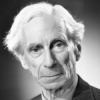
Bertrand Russell
Bertrand Arthur William Russell, 3rd Earl Russell, OM, FRSwas a British philosopher, logician, mathematician, historian, writer, social critic, political activist and Nobel laureate. At various points in his life he considered himself a liberal, a socialist, and a pacifist, but he also admitted that he had "never been any of these things, in any profound sense". He was born in Monmouthshire into one of the most prominent aristocratic families in the United Kingdom...
NationalityBritish
ProfessionPhilosopher
Date of Birth18 May 1872
Gradually, ... the aspect of science as knowledge is being thrust into the background by the aspect of science as the power of manipulating nature. It is because science gives us the power of manipulating nature that it has more social importance than art. Science as the pursuit of truth is the equal, but not the superior, of art. Science as a technique, though it may have little intrinsic value, has a practical importance to which art cannot aspire.
I wish to propose for the reader's favourable consideration a doctrine which may, I fear, appear wildly paradoxical and subversive. The doctrine in question is this: that it is undesirable to believe a proposition when there is no ground whatever for supposing it true.
Historically, it is quite doubtful whether Christ ever existed at all, and if He did we do not know anything about Him.
I believe that when I die I shall rot, and nothing of my ego will survive. I am not young, and I love life. But I should scorn to shiver with terror at the thought of annihilation. Happiness is nonetheless true happiness because it must come to an end, nor do thought and love lose their value because they are not everlasting.
What is best in mathematics deserves not merely to be learnt as a task, but to assimilated as a part of daily thought, and brought again and again before the mind with ever-renewed encouragement.
The scientific attitude of mind involves a sweeping away of all other desires in the interest of the desire to know.
The examination system, and the fact that instruction is treated mainly as a training for a livelihood, leads the young to regard knowledge from a purely utilitarian point of view as the road to money, not as the gateway to wisdom.
Science is what we know, and philosophy is what we don't know.
I conclude that, while it is true that science cannot decide questions of value, that is because they cannot be intellectually decided at all, and lie outside the realm of truth and falsehood. Whatever knowledge is attainable, must be attained by scientific methods; and what science cannot discover, mankind cannot know.
If we were all given by magic the power to read each other's thoughts, I suppose the first effect would be to dissolve all friendships.
We know too much and feel too little. At least, we feel too little of those creative emotions from which a good life springs.
The life of man is a long march through the night, surrounded by invisible foes, tortured by weariness and pain, towards a goal that few can hope to reach, and where none may tarry long.
What hunger is in relation to food, zest is in relation to life.
[Man] ... his origin, his growth, his hopes and fears, his loves and his beliefs are but the outcome of accidental collocations of atoms; that no fire, no heroism, no intensity of thought and feeling can preserve an individual life beyond the grave; that all the labour of the ages, all the devotion, all the inspiration, all the noonday brightness of human genius are destined to extinction in the vast death of the solar system, and that the whole temple of Man's achievement must inevitably be buried beneath the debris of a universe in ruins...